Topics Covered:
Selecting the right garage door for your Raleigh home requires more than choosing an attractive design. The Triangle area presents unique environmental conditions that can make or break the performance of wood and composite garage doors. With average annual humidity levels reaching 71% and summer peaks climbing to 78%, homeowners need garage doors built to withstand North Carolina’s demanding climate while complementing the architectural character of neighborhoods like North Hills and Five Points.
Why Raleigh’s Humid Subtropical Climate Demands Strategic Material Selection
Raleigh experiences what climatologists classify as a humid subtropical climate, creating specific challenges for exterior building materials. The area receives significant precipitation throughout the year, with July, August, and September bringing the heaviest rainfall. During summer months, temperatures regularly climb into the mid-80s to mid-90s, accompanied by humidity that makes the air feel substantially warmer. These conditions create an environment where moisture can penetrate unprotected wood, leading to expansion, contraction, warping, and eventual decay.
The muggy period lasts approximately 4.5 months, from May through October, during which outdoor materials face relentless exposure to moisture-laden air. Wood garage doors installed without proper protection or maintenance schedules will show signs of deterioration within just a few years. The combination of heat and humidity accelerates the breakdown of protective finishes, allowing water to seep into the wood grain. Once moisture penetrates the surface, it creates ideal conditions for rot, mildew growth, and structural weakening that compromises both aesthetics and functionality.
Understanding these climate factors helps homeowners make informed decisions about material selection, protective coatings, and maintenance schedules. The garage door represents one of the largest exterior features of your home, typically occupying 25-30% of the street-facing elevation. Choosing materials that can withstand Raleigh’s environmental conditions protects your investment while maintaining the curb appeal that adds significant value to your property. According to recent industry data, garage door replacements consistently deliver a return on investment between 90-97%, making material selection a decision with both practical and financial implications.
Key Climate Factors Affecting Garage Door Performance in Raleigh:
- Average Annual Humidity: Approximately 71%, with morning humidity reaching 85%
- Peak Humidity Season: August experiences the highest levels at 78% average relative humidity
- Temperature Fluctuations: Winter lows around 33°F to summer highs near 89°F create expansion and contraction cycles
- Precipitation Patterns: Wettest months occur during July, August, and September when doors face maximum moisture exposure
- Muggy Period Duration: 4.5 months of oppressive humidity from May through October
Cedar Garage Doors: Natural Beauty With Built-In Protection
Cedar stands as one of the most popular wood species for garage doors in humid climates, and for good reason. This softwood contains natural oils that act as preservatives, providing inherent resistance to decay, rot, and insect damage. Western Red Cedar, the most common variety used in garage door construction, exhibits a beautiful grain pattern with colors ranging from nearly white to pink to dark brown. The wood accepts stains and finishes beautifully, allowing homeowners to achieve custom looks that complement their home’s architectural style while enhancing the natural characteristics of the material.
The cellular structure of cedar makes it naturally lightweight compared to hardwoods, reducing stress on garage door opener mechanisms and hardware components. This characteristic proves particularly beneficial for larger double garage doors where weight becomes a significant factor in operational efficiency and hardware longevity. Cedar’s dimensional stability means it experiences less expansion and contraction than many other wood species when exposed to temperature and humidity fluctuations. However, this stability does not eliminate the need for protective maintenance. In Raleigh’s humid climate, cedar garage doors require sealing every two years to maintain their appearance and protective qualities.
The natural oils in cedar gradually diminish over time, especially when exposed to direct sunlight and weather elements. Without proper sealing and refinishing, cedar will weather to a silvery-gray patina. While some homeowners find this weathered look appealing, it indicates that the protective oils have dissipated and the wood has become more vulnerable to moisture penetration. Professional-grade sealants with UV protection help maintain the wood’s natural defenses while preserving its color and preventing the surface checking and cracking that can occur in unprotected wood. When properly maintained, cedar garage doors can provide decades of reliable performance while delivering the warmth and natural beauty that synthetic materials cannot replicate.
Cedar Garage Door Performance Characteristics:
- Natural Decay Resistance: Built-in oils provide protection against rot and fungal growth
- Insect Protection: Natural compounds repel termites and other wood-boring insects
- Lightweight Construction: Reduces strain on opener mechanisms and extends hardware life
- Dimensional Stability: Experiences less warping than many alternative wood species
- Finishing Versatility: Accepts stains, paints, and clear finishes for customized appearances
- Natural Insulation: Provides inherent R-value of approximately 2.17 before additional insulation layers
Cedar vs. Other Wood Species – Durability Comparison:
| Wood Species | Decay Resistance | Moisture Tolerance | Maintenance Frequency | Expected Lifespan (With Proper Care) |
|---|---|---|---|---|
| Western Red Cedar | Excellent | Very Good | Every 2 years | 25-40 years |
| Redwood | Excellent | Good | Every 2-3 years | 30-50 years |
| Mahogany | Excellent | Excellent | Every 3-5 years | 40-60 years |
| Hemlock | Moderate | Fair | Every 1-2 years | 15-25 years |
Redwood Garage Doors: Premium Aesthetics With Climate Considerations
Redwood delivers unmatched natural beauty with its rich, warm tones ranging from light amber to deep reddish-brown. This premium wood species features a straight, uniform grain that provides a refined appearance suitable for high-end custom homes. The wood’s natural tannin content offers significant resistance to shrinking, decay, and insect damage, making it an attractive option for exterior applications. Redwood’s lightweight nature relative to its strength makes it manageable for large garage door installations without requiring reinforced opener systems or excessive hardware.
However, redwood presents specific challenges in Raleigh’s humid climate that homeowners must address through proactive measures. The species shows susceptibility to warping when exposed to moisture combined with hot temperatures, conditions that occur regularly during Triangle summers. This warping tendency requires manufacturers to construct redwood garage doors using thinner layered panels rather than solid thick sections. The layered construction helps mitigate warping by distributing moisture absorption across multiple surfaces rather than allowing it to concentrate in a single thick piece. This engineering approach maintains the door’s aesthetic appeal while improving dimensional stability.
Redwood garage doors command premium pricing due to the wood’s scarcity and desirable characteristics. The investment in redwood doors makes sense for homeowners who prioritize natural aesthetics and are committed to the maintenance schedule required to protect their investment. The wood requires application of high-quality sealants or exterior-grade finishes every two to three years, depending on sun exposure and weather conditions. Areas receiving direct southern or western sun exposure will need more frequent attention to prevent UV damage and moisture penetration. When homeowners maintain proper protective coatings and address any signs of moisture damage promptly, redwood garage doors develop a beautiful patina over time while maintaining their structural integrity and visual appeal.
“We’ve installed hundreds of wood garage doors throughout the Triangle, and redwood consistently impresses homeowners with its natural beauty. However, we always emphasize the importance of maintenance in our climate. The homeowners who stay on top of their sealing schedule end up with doors that look better after 15 years than neglected cedar doors look after five. That commitment to care makes all the difference in Raleigh’s humidity.” – RJ Garage Door Service Team
Redwood Garage Door Advantages and Considerations:
- Visual Appeal: Rich color variations and straight grain patterns create premium aesthetics
- Tannin Content: Natural compounds provide rot and insect resistance
- Lightweight Strength: High strength-to-weight ratio reduces operational stress
- Staining Capability: Accepts finishes beautifully for customized color depth
- Warping Susceptibility: Requires layered construction to manage moisture-related movement
- Premium Investment: Higher initial cost reflects wood scarcity and quality
Composite Garage Doors: The Low-Maintenance Alternative
Composite garage doors have emerged as the practical solution for homeowners who want the authentic appearance of wood without the demanding maintenance schedule. These engineered products combine wood fibers with resins and binding agents, creating a material that mimics wood grain and texture while resisting the moisture damage, warping, and decay that plague natural wood in humid climates. Modern composite materials have advanced significantly, with manufacturers now producing products that closely replicate the visual characteristics of cedar, mahogany, and other premium woods. The technology behind composite construction allows for consistent quality control and predictable performance characteristics that natural wood cannot guarantee.
The engineering of composite garage doors addresses the specific vulnerabilities that moisture creates in traditional wood doors. Unlike natural wood, which absorbs water through its cellular structure, composite materials are formulated to repel moisture at the molecular level. This fundamental difference means composite doors will not swell, shrink, or warp through seasonal humidity cycles. The materials resist rot and fungal growth, eliminating the need for frequent sealing and refinishing that wood requires. Manufacturers typically overlay composite materials on steel or aluminum cores, combining the aesthetic appeal of wood-look surfaces with the structural strength and dimensional stability of metal frameworks.
Composite garage doors offer particular advantages for Raleigh homeowners who face HOA restrictions or architectural guidelines. The doors provide weather-resistant construction while delivering the traditional appearance many HOAs require. Installation and operational characteristics mirror those of steel doors, with similar weight properties and hardware requirements. The initial investment for composite doors typically falls between wood and steel pricing, ranging from $1,200 to $5,000 for a double garage door depending on quality level and customization options. While this represents a higher upfront cost than basic steel doors, the reduced maintenance requirements and extended lifespan create favorable long-term economics. Composite doors resist the scratches and dents that can compromise steel doors, and when damage does occur, repairs are often simpler and less expensive than refinishing damaged wood sections.
“When clients ask us about the best value proposition for Raleigh’s climate, we often point them toward high-quality composite doors. The technology has reached a point where you really need to look closely to distinguish them from real wood, but the performance difference is dramatic. Our composite door customers virtually never call us with moisture-related issues, while wood door owners need to stay vigilant about their maintenance schedules. For busy families, that convenience factor alone justifies the investment.” – RJ Garage Door Service Team
Composite Garage Door Benefits:
- Weather Resistance: Engineered to withstand extreme humidity without warping or rotting
- Minimal Maintenance: Requires only periodic cleaning rather than sealing and refinishing
- Consistent Quality: Manufacturing process ensures uniform color and texture throughout the door
- Dent Resistance: Composite overlays on steel cores resist impact damage better than wood
- Insulation Options: Can be manufactured with polyurethane or polystyrene cores for R-values up to 18
- Cost Effectiveness: Mid-range initial investment with lower lifetime maintenance costs than wood
Material Performance Comparison – Wood vs. Composite:
| Performance Factor | Natural Wood | Composite |
|---|---|---|
| Moisture Resistance | Moderate (requires sealing) | Excellent (inherent resistance) |
| Maintenance Frequency | Every 1-3 years | Annual cleaning only |
| Warping Risk | Moderate to High | Very Low |
| Refinishing Capability | Excellent (multiple times) | Limited (surface damage) |
| Initial Cost (Double Door) | $2,500 – $10,000+ | $1,200 – $5,000 |
| Expected Lifespan | 25-50 years | 20-40 years |
| Insulation R-Value Range | 2.17 – 9 (with foam core) | 9 – 18 (with insulation) |
Matching Garage Doors to Raleigh’s Architectural Styles
The architectural landscape across Raleigh’s established neighborhoods provides rich context for garage door selection decisions. Historic areas like Five Points, where Hayes Barton, Bloomsbury, Georgetown, Vanguard Park, and Roanoke Park converge, showcase architectural styles from the 1910s through 1920s development period. These neighborhoods feature Colonial Revival homes with symmetrical facades and formal proportions, Craftsman bungalows with detailed woodwork and natural materials, and Traditional homes that blend elements from multiple historical periods. Each architectural style creates specific aesthetic expectations that garage doors must meet to maintain neighborhood character and property values.
Colonial Revival homes, prevalent throughout Hayes Barton and parts of Five Points, typically feature raised panel garage doors that echo the formal symmetry of the architecture. These doors often incorporate multi-pane windows arranged in grid patterns that mirror the home’s existing windows, creating visual cohesion across the facade. The panel layout usually follows a symmetrical arrangement, with either recessed or raised panels that provide depth and visual interest without overwhelming the classic design. Natural wood finishes in traditional stains or painted surfaces in historically appropriate colors complement the brick or siding materials common to these homes. Hardware selections lean toward wrought iron or oil-rubbed bronze finishes that suggest historical authenticity while providing modern functionality.
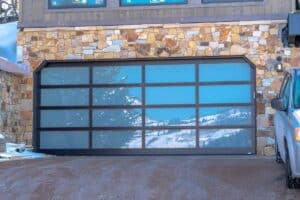
North Hills presents a different architectural character, blending luxury modern construction with renovated mid-century homes and contemporary custom builds. This diverse neighborhood embraces clean lines, mixed materials, and bold design choices that allow for more experimental garage door selections. Modern farmhouse aesthetics have gained significant traction, combining wood-look finishes with board-and-batten styling or horizontal plank designs. Mid-century modern homes pair beautifully with flush panel wood or composite doors featuring minimal hardware and clean geometric proportions. The contemporary custom homes throughout North Hills often incorporate mixed materials, combining wood-look panels with glass inserts, metal accents, or stone surrounds that create architectural interest while maintaining the streamlined aesthetic that defines modern design. These neighborhoods demonstrate how garage door selection can either complement existing architectural styles or provide opportunities for thoughtful updates that enhance curb appeal while respecting neighborhood character.
Architectural Style and Garage Door Pairing Guide:
- Colonial Revival Homes: Raised or recessed panel doors with symmetrical layouts, multi-pane windows in grid patterns, painted or natural stained finishes
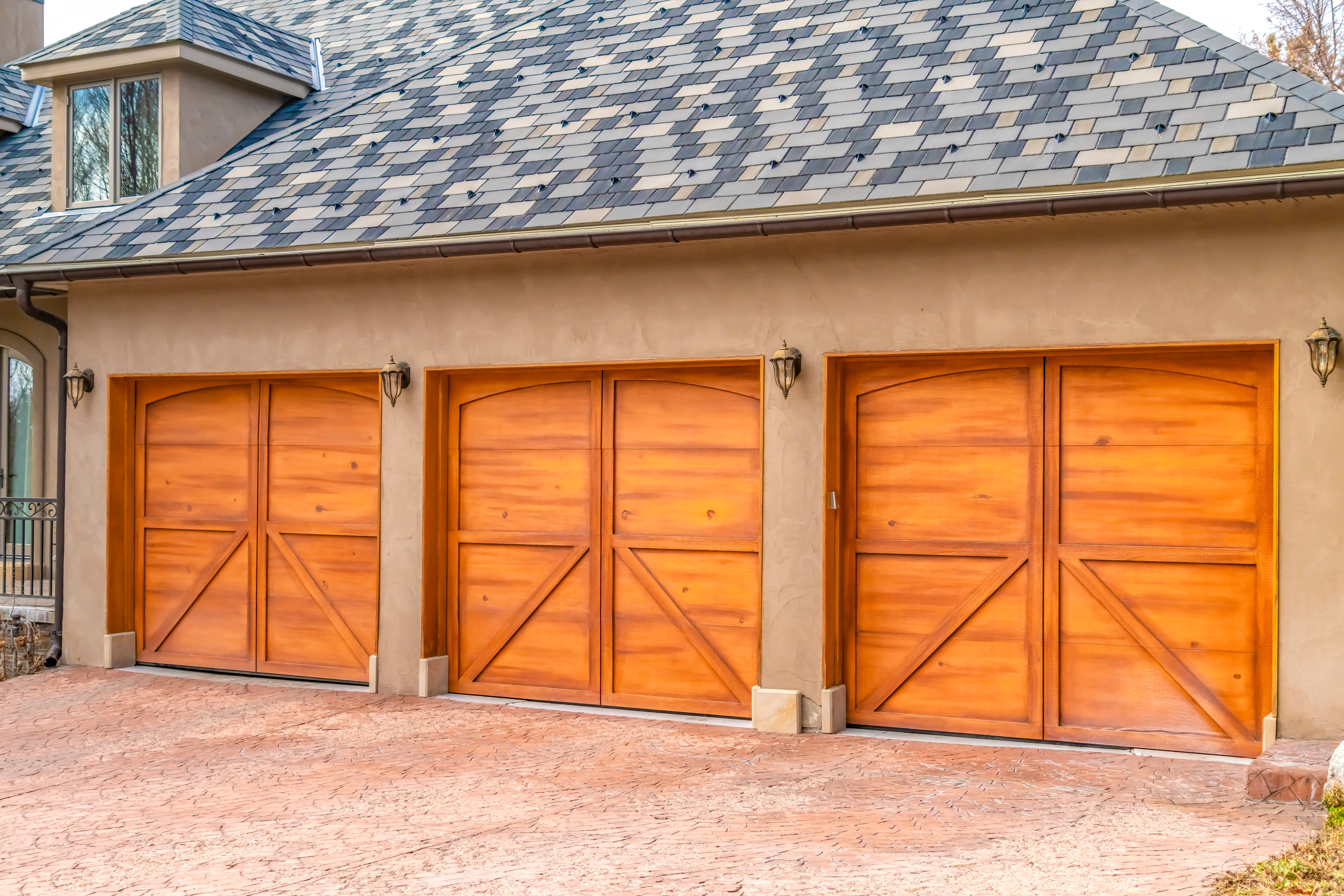
- Craftsman Bungalows: Carriage house designs with decorative hardware, cross-buck or overlay patterns, natural wood finishes or earth-tone paints
- Traditional Homes: Versatile panel designs that blend historical and contemporary elements, neutral colors that complement exterior materials
- Modern Farmhouse: Board-and-batten or horizontal plank designs, wood-look finishes in weathered or natural tones, minimal hardware
- Mid-Century Modern: Flush panel construction with clean lines, natural wood or composite in warm tones, glass panel inserts for natural light
- Contemporary Custom: Mixed materials combining wood, glass, and metal, asymmetrical designs, bold hardware choices
Essential Maintenance Requirements for Wood Garage Doors in Humid Climates
Maintaining wood garage doors in Raleigh’s climate requires establishing a consistent schedule and understanding the specific vulnerabilities that humidity creates. The protective finish on wood doors serves as the primary defense against moisture penetration, and that finish degrades continuously through exposure to UV radiation, temperature fluctuations, and atmospheric moisture. Professional-grade wood sealants or exterior paints should be reapplied every one to three years depending on exposure conditions and product quality. Doors facing southern or western exposures receive more intense sun and will need refinishing on the shorter end of that timeline, while doors with overhead protection or northern exposures may extend the interval slightly.
The refinishing process requires more than simply applying a new coat of sealant over the existing finish. Proper maintenance begins with thorough cleaning using mild detergent solutions and soft brushes or cloths to remove accumulated dirt, pollen, and atmospheric contaminants. After cleaning and allowing complete drying, homeowners should inspect the entire surface for signs of peeling, cracking, or areas where the finish has worn thin. These compromised areas need scraping or sanding to remove loose material and create a sound surface for new finish application. Applying finish to doors with peeling or flaking coatings traps moisture beneath the new layer, accelerating deterioration rather than preventing it. The investment in proper surface preparation pays dividends through improved finish adhesion and extended protection intervals.
Beyond refinishing schedules, wood garage door maintenance includes regular inspection of weatherstripping, hardware lubrication, and prompt attention to any signs of moisture damage. Weatherstripping along the bottom and sides of the door creates critical barriers against water intrusion, and degraded seals should be replaced immediately rather than waiting for scheduled maintenance intervals. Moving components including hinges, rollers, and tracks benefit from silicone-based lubricant applications twice annually to prevent friction-related wear and ensure smooth, quiet operation. Watch for soft spots, discoloration, or surface checking that indicates moisture has penetrated the protective finish. When caught early, localized damage can often be repaired with wood filler, sanding, and spot refinishing. Delayed attention allows moisture damage to spread, potentially requiring panel replacement or complete door refinement at significantly higher cost.
Wood Garage Door Maintenance Schedule for Raleigh Climate:
- Quarterly Tasks: Clean surfaces with mild detergent, inspect for damage or wear, check weatherstripping condition, test door balance and operation
- Bi-Annual Tasks: Lubricate all moving parts with silicone-based products, tighten hardware connections, inspect and clean tracks
- Annual Tasks: Comprehensive surface inspection for finish degradation, evaluate need for refinishing, professional tune-up service
- Every 1-3 Years: Complete refinishing with appropriate sealant or paint system, replace worn weatherstripping, address any identified structural issues
- As Needed: Repair localized damage immediately, replace broken or bent hardware, address operational issues promptly
Annual Maintenance Cost Comparison:
| Door Material | Routine Cleaning | Refinishing (Every 2-3 Years) | Hardware Maintenance | Average Annual Cost |
|---|---|---|---|---|
| Cedar Wood | $50 – $100 | $400 – $800 | $75 – $150 | $300 – $500 |
| Redwood | $50 – $100 | $500 – $1,000 | $75 – $150 | $350 – $600 |
| Composite | $50 – $100 | $0 | $75 – $150 | $100 – $200 |
| Steel (Painted) | $50 – $100 | $200 – $400 (every 5-7 years) | $75 – $150 | $150 – $250 |
Investment Analysis: Initial Costs and Long-Term Value
The financial commitment for wood and composite garage doors extends beyond the initial purchase and installation costs. A comprehensive analysis must account for maintenance expenses, expected lifespan, energy efficiency contributions, and impact on home resale value. Natural wood garage doors represent the highest initial investment, with cedar doors typically ranging from $2,500 to $6,500 for a single door installation, while premium redwood or mahogany options can reach $6,000 to $10,000 or more for double doors with custom features and professional installation. These costs reflect the material scarcity, manufacturing complexity, and skilled labor required for proper installation of heavy wood doors.
Composite garage doors occupy the middle ground between basic steel doors and premium wood options, with quality composite doors installed typically costing between $2,500 and $5,000 for double door applications. This pricing includes doors featuring realistic wood-grain textures, insulated cores, and decorative hardware that creates an authentic wood appearance. While composite doors cost more than basic steel alternatives, the price differential narrows when comparing composite to properly maintained wood doors over a 20-year ownership period. The cumulative maintenance savings on composite doors, which require only periodic cleaning rather than regular refinishing, can offset the initial price premium within five to seven years of ownership.
The return on investment calculation must also consider the impact on home value and marketability. Recent industry data indicates garage door replacements deliver average ROI between 90-97% nationally, with some markets exceeding 100% return. Homes with well-maintained, aesthetically appropriate garage doors sell faster and command higher prices than comparable properties with dated or damaged doors. The garage door constitutes a significant portion of the home’s curb appeal, creating powerful first impressions that influence buyer perceptions of overall property condition and quality. In neighborhoods with strong architectural character like Five Points or North Hills, garage doors that complement the home’s style and maintain the neighborhood aesthetic contribute to sustained property values and community desirability. This value contribution extends beyond the immediate transaction, supporting long-term property appreciation and neighborhood stability.
Cost Breakdown – Double Garage Door Installation (16×7 feet):
- Cedar Wood Door: $4,000 – $10,000 including materials, hardware, insulation options, and professional installation
- Redwood Wood Door: $6,000 – $15,000 for premium heartwood with custom design and installation
- Composite Door: $2,500 – $5,500 with wood-look finish, insulated core, and complete installation
- Steel with Wood Overlay: $2,000 – $4,000 combining durability with wood aesthetics
- Basic Insulated Steel: $1,800 – $3,500 for comparison baseline
Insulation Value and Energy Efficiency:
| Door Type | Base R-Value | With Insulation Core | Annual Energy Savings (Attached Garage) |
|---|---|---|---|
| Solid Wood (No Insulation) | 2.17 | N/A | $50 – $100 |
| Wood with Foam Core | 2.17 | 9 – 12 | $150 – $250 |
| Composite (Polystyrene) | 3.8 – 5 | 9 – 12 | $150 – $250 |
| Composite (Polyurethane) | 5.5 – 6.5 | 16 – 18 | $200 – $350 |
| Steel Triple-Layer | 0 | 16 – 18.4 | $200 – $350 |
Working With HOAs and Architectural Review Boards
Homeowners associations throughout Raleigh’s planned communities maintain architectural guidelines designed to preserve neighborhood character and property values. These regulations commonly address garage door materials, colors, styles, and design features, with some HOAs maintaining approved product lists or requiring specific manufacturers. Before purchasing a new garage door, homeowners should obtain current copies of their HOA’s Covenants, Conditions, and Restrictions along with any architectural review board guidelines that govern exterior modifications. Understanding these requirements before making selections prevents costly mistakes and ensures smooth approval processes.
Common HOA restrictions include approved color palettes, typically favoring neutral tones like white, beige, tan, gray, or brown that maintain visual harmony across the neighborhood. Material specifications may favor wood or wood-look products in traditional neighborhoods while allowing more contemporary options in modern developments. Window configurations often face restrictions regarding placement, size, and grid patterns to maintain architectural consistency. Decorative hardware selections may be specified or restricted based on neighborhood aesthetic standards. Some associations require doors to match existing architectural details of the home, creating cohesion between the garage door and other exterior elements.
The approval process typically requires submitting detailed specifications including manufacturer information, model numbers, color samples, material composition, window configurations, and hardware selections. Professional garage door companies experienced in working with HOAs can provide the documentation and specifications that approval boards require, streamlining the review process and reducing the likelihood of rejections or required modifications. We maintain relationships with local HOAs and understand the specific requirements of communities throughout the Triangle, allowing us to guide homeowners toward compliant selections that meet both aesthetic preferences and regulatory requirements. Proactive communication with your HOA and engagement with experienced professionals prevents delays and ensures your garage door investment enhances your home while maintaining neighborhood standards.
HOA Approval Process Checklist:
- Documentation Requirements: Obtain complete manufacturer specifications, color samples, material composition details, installation timeline, contractor licensing information
- Application Submission: Complete architectural review forms with all required attachments, submit well before purchase commitments, allow adequate review time
- Design Compliance: Verify color selection against approved palette, confirm material matches neighborhood standards, ensure window configurations meet guidelines
- Professional Support: Work with experienced contractors who understand local HOA requirements, request documentation packages designed for HOA submissions
- Timeline Planning: Allow 2-4 weeks for initial review, build in time for potential revision requests, avoid peak submission periods when possible
Making the Right Choice for Your Raleigh Home
Selecting between wood and composite garage doors requires balancing aesthetic preferences, maintenance commitment, budget constraints, and long-term ownership plans. Homeowners planning to stay in their homes for extended periods and who appreciate the authentic character of natural materials may find the maintenance requirements of wood doors acceptable in exchange for the unmatched beauty and customization possibilities wood provides. Those with busy schedules, limited interest in regular maintenance projects, or concerns about long-term upkeep costs often discover that high-quality composite doors deliver the visual appeal they desire without the ongoing refinishing demands.
Climate considerations carry significant weight in the Triangle area. Raleigh’s humidity levels create challenging conditions for wood products, requiring diligent maintenance to prevent moisture damage and preserve appearance. Homeowners willing to commit to regular sealing schedules and prompt attention to any signs of wear can successfully maintain beautiful wood garage doors for decades. However, those who tend to defer maintenance tasks or who lack the time for regular upkeep should seriously consider composite alternatives that resist moisture damage and maintain their appearance with minimal intervention.
The decision also reflects on your home’s architectural style and neighborhood context. Traditional neighborhoods with established architectural character often benefit from the authentic appearance of natural wood doors, while composite products provide practical alternatives that maintain aesthetic harmony. Modern neighborhoods with contemporary architecture may embrace either wood or composite materials depending on design preferences and desired maintenance levels. Working with garage door professionals who understand both the products and the local market helps homeowners navigate these decisions with confidence, ensuring the final selection enhances their home’s appearance, meets their practical needs, and fits within their budget parameters.
Partner With Local Experts Who Understand Raleigh’s Unique Needs
At RJ Garage Door Service, we bring decades of experience helping Triangle homeowners select, install, and maintain garage doors that perform beautifully in our climate. We understand the specific challenges that Raleigh’s humidity creates for wood products and can recommend solutions tailored to your home’s architectural style, your maintenance preferences, and your budget. Our team stays current on the latest composite technologies, helping you evaluate options that deliver authentic wood aesthetics with reduced maintenance requirements.
Whether you’re drawn to the timeless elegance of cedar, the premium beauty of redwood, or the practical advantages of modern composite materials, we provide the expertise and support you need to make informed decisions. We work directly with HOAs throughout the area, providing the documentation and specifications required for smooth approval processes. Our installation teams deliver precise, professional work that ensures your new garage door operates reliably for years while enhancing your home’s curb appeal and value.
Ready to explore wood and composite garage door options for your Raleigh home? Contact the RJ Garage Door Service team today for a comprehensive consultation. We’ll assess your home’s specific needs, discuss material options that match your aesthetic vision and practical requirements, and provide transparent pricing for solutions that protect your investment while delivering the beauty and performance you deserve. Let us help you select the perfect garage door that complements your home and stands up to everything North Carolina’s climate brings.