
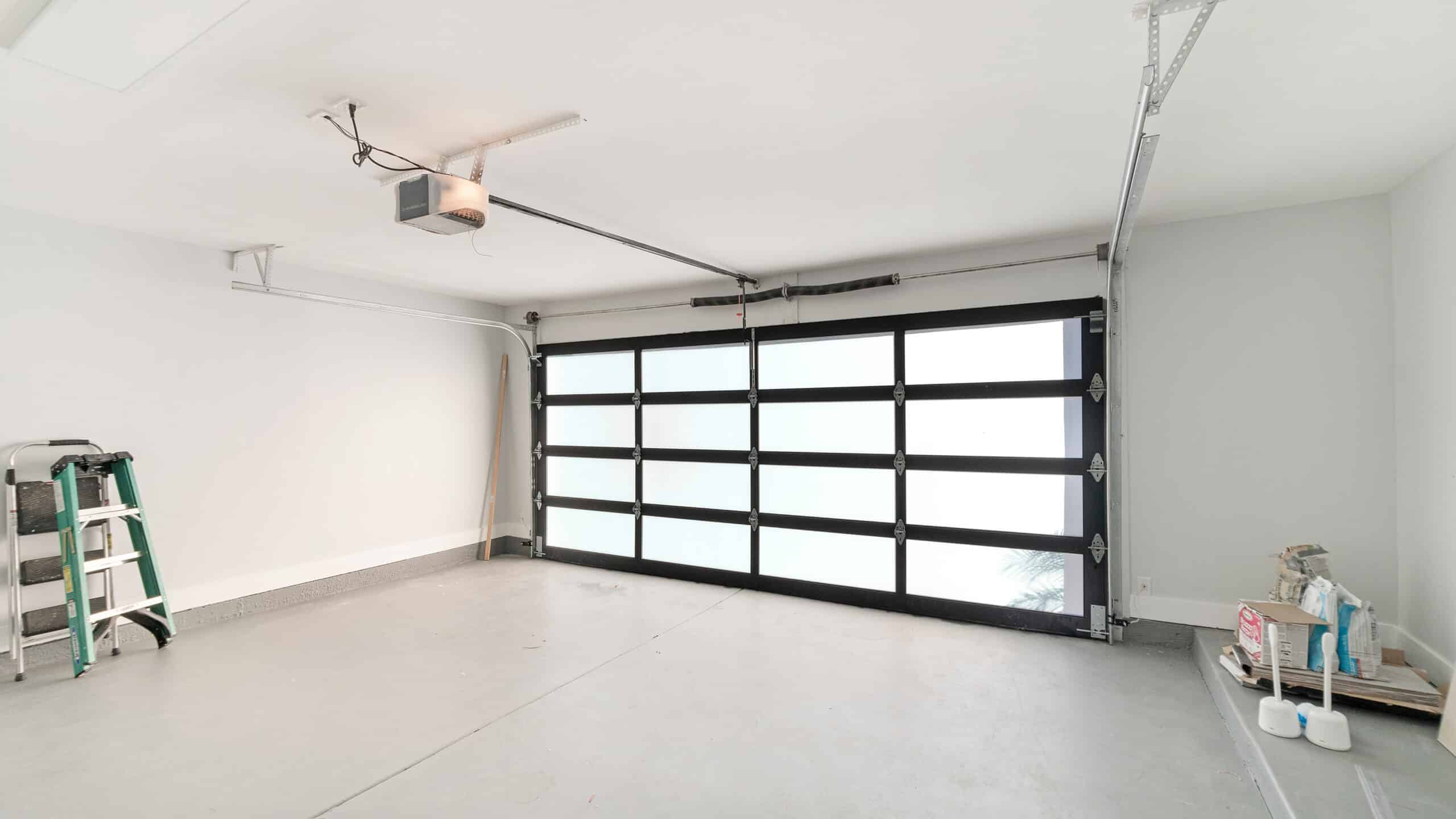
Topics Covered:
Key takeaways
- Tempered glass is about four times stronger than regular glass and breaks into small, blunt pieces, while laminated glass bonds two glass layers to a polyvinyl butyral (PVB) interlayer that holds the pane together when it cracks.
- The National Association of Home Builders (NAHB) life expectancy study, as reported by DASMA in 2007, puts the typical life of a garage door at 10 to 15 years.
- The U.S. Department of Energy says a lower U-factor means a more energy-efficient door, and a low solar heat gain coefficient (SHGC) cuts summer cooling loads, which suits Raleigh’s hot, humid summers.
- Aluminum is the most popular frame for glass garage doors in Raleigh, NC because it resists rust in humid air; steel frames need a galvanized or powder-coated finish.
- Tinted glass (standard, reflective or color) and frosted glass (acid-etched, sandblasted or custom patterns) add privacy while still letting daylight into the garage.
The best glass garage door for a Raleigh, NC home uses tempered or laminated glass, has insulated double- or triple-pane glazing with a Low-E coating, includes the privacy level you need, and sits in an aluminum or powder-coated steel frame that can handle North Carolina humidity. RJ Garage Door Service has installed garage doors in Raleigh, Durham, Cary, Fayetteville and the rest of the Triangle since 2013, and glass doors are one of the quickest ways to give a house a modern look. This guide walks through the five things to check before you buy one: glass strength, insulation, privacy, maintenance and the frame.
How durable and strong is the glass in a garage door?
The glass in a quality garage door is durable and strong when it is tempered or laminated, and the strength of the glass is one of the most important things to check before you buy. Glass strength is a safety question as much as a looks question. Garage door glass has to stand up to weather and to the occasional impact, and Raleigh sees heavy rain, strong winds and occasional hail.
Tempered glass and laminated glass are the two common types of glass in garage doors. Tempered glass is about four times stronger than regular glass, so it resists breakage. If tempered glass does break, it shatters into small, blunt pieces instead of sharp shards, which greatly reduces the risk of injury. Laminated glass is made by bonding two layers of glass to a layer of polyvinyl butyral (PVB) in between. The PVB layer holds the glass together even when it cracks, so laminated glass stays in the frame after an impact.
Durability counts because a garage door is a long-term purchase. The National Association of Home Builders’ study of home component life expectancies put the typical life of a garage door at 10 to 15 years, according to a 2007 report in DASMA’s Door & Access Systems magazine. A well-maintained door built from good materials can last longer than that. Durable glass means fewer repairs and replacements, which are costly and inconvenient.
Impact resistance and weather resilience come next. Your garage door has to handle impacts as well as everyday wear and tear. If you live in a neighborhood with active children, or close to a golf course, the risk of a ball hitting the door goes up. Impact-resistant glass can absorb those hits without weakening the door. Laminated glass is the stronger choice here, because the PVB layer keeps a cracked pane in one piece until it can be replaced.
The glass must also handle temperature swings, which are common in Raleigh and across central North Carolina. Summer temperatures can soar, while winter can bring frost and ice. Glass that is not designed for those changes can crack or weaken over time, so high-quality tempered or laminated glass is the safer choice for a door you want to keep for years.
When you compare garage door glass, check four things:
- Glass type comes first. Choose tempered or laminated glass for the most durability and safety.
- Thicker glass gives better impact resistance and better insulation.
- A UV-resistant coating keeps sunlight from fading and damaging things inside your garage.
- The weather rating should match your exposure, especially if the garage faces direct sun or harsh weather.
Strong tempered or laminated glass also makes the garage safer and more secure, and RJ Garage Door Service can show you glass samples before you order.
How do glass garage doors handle insulation and energy efficiency?
Glass garage doors can be energy efficient when they use insulated glass, even though glass by nature is a poor insulator compared with wood or steel. Advances in manufacturing now make it possible to build glass garage doors with good insulation, which helps keep your home comfortable and your energy costs down.
Insulation is important in a climate like Raleigh’s, where summers are hot and humid and winters can dip below freezing. A poorly insulated garage can raise your energy bills, because your heating and cooling system works harder to hold the temperature inside an attached house. An insulated glass garage door can noticeably improve your home’s energy efficiency.
Insulated glass for garage doors comes in three main types:
- Double-pane glass is the most common insulated glass. It has two layers of glass with a space between them, often filled with air or an inert gas like argon, which reduces heat transfer.
- Triple-pane glass uses three layers of glass for even better insulation. Triple-pane glass suits homeowners who want maximum energy efficiency, since the third layer adds another barrier to heat transfer.
- Low-emissivity (Low-E) glass has a special coating that reflects heat while letting light pass through. Low-E glass can cut heat gain in summer and heat loss in winter, which makes it a popular choice.
Energy efficiency ratings tell you how well a glass door performs. The U.S. Department of Energy defines U-factor as the rate at which a window, door or skylight transmits non-solar heat flow, and the lower the U-factor, the more energy-efficient the product. The solar heat gain coefficient (SHGC) is the fraction of solar radiation the glass lets through. The Department of Energy notes that a low SHGC reduces summer cooling loads, so lower SHGC values are the better pick for a warm climate like Raleigh’s. The National Fenestration Rating Council (NFRC) label on a rated door or window lists both numbers, so ask the manufacturer or installer for the NFRC figures on any glass garage door you are considering.
Insulated glass garage doors have three benefits:
- Insulated glass can lower energy bills by keeping the temperature inside your home more stable.
- A well-insulated garage door makes the garage more comfortable year-round, which counts if you use the garage as a workspace or living area.
- Lower energy use also means a smaller carbon footprint for your home.
When you shop for insulated glass, look at these three things:
- Double- or triple-pane glass gives better energy efficiency, depending on how much insulation you need.
- A Low-E coating reduces heat transfer and improves energy savings.
- U-factor and SHGC ratings show whether the door offers the right insulation for your climate.
Even the best insulated glass door has limits. If you plan to heat or cool your garage as a full-time workshop, an insulated steel door will hold temperature better than any glass door, and a steel door with a row of glass windows is a reasonable middle ground.
What privacy and tinting options do glass garage doors have?
Glass garage doors come with tinting and frosting options that give you privacy while still letting light in. Privacy is often a top concern with a glass garage door, especially if the garage faces the street or a neighbor’s house. A glass door’s sleek look and natural light are the main reasons people buy one, and those same qualities make it easy to see inside.
Tinting and frosting are the two popular ways to add privacy to garage door glass. Tinted glass is treated with a color or coating that reduces its transparency, which makes it harder to see through from outside. Frosted glass is treated with acid or sandblasting to create a translucent finish that blurs the view while still letting light pass through. You can choose the level of tint or frost you want, from complete opacity to a subtle reduction in visibility.
Garage door tinting comes in three types:
- Standard tinting uses a film or coating to darken the glass, from light to dark. Darker tints give more privacy but let less natural light into the garage.
- Reflective tinting creates a mirror-like surface on the outside of the glass, which gives privacy during the day while you can still see out from inside. Reflective tint suits homeowners who want strong privacy without giving up natural light.
- Color tinting comes in many shades, so you can add a decorative element and match or complement your home’s exterior color scheme.
Garage door frosting also comes in three types:
- Acid-etched frosting uses acid to etch the glass surface into a smooth, frosted finish. Acid-etched glass gives a high level of privacy and is durable and easy to clean.
- Sandblasted frosting blasts the glass with fine sand particles to create a rough, frosted texture. Sandblasted glass is slightly more textured than acid-etched glass and gives similar privacy.
- Custom frosting patterns add a unique design to the glass, so you get a personalized look along with the privacy of frosted glass.
Three factors decide which privacy option fits your home:
- Privacy level depends on where your garage sits and how close it is to neighbors or the street. Darker tints and heavier frosting give more privacy but may reduce natural light.
- Appearance should match your home’s design. Reflective tints give a modern look, while custom frosting patterns add a decorative touch.
- Maintenance varies by option. Reflective tints may show fingerprints more easily, while acid-etched frosting is generally low-maintenance.
Privacy and tinting options bring three benefits. You get the look of a glass garage door without giving up privacy. Limiting what people can see inside your garage reduces the risk of break-ins. Tinting and frosting also let you customize the door to match your home’s style and your own taste.
What are the maintenance requirements for a glass garage door?
A glass garage door needs regular cleaning of the glass, periodic lubrication of the hardware, and routine checks of the frame and seals. Glass garage doors look modern and stylish, but they take more upkeep than a plain steel door to stay clear and work smoothly. Knowing the maintenance up front helps you decide whether a glass door is right for your home.
Cleaning the glass panels removes the dirt, grime and water spots that build up over time. Depending on where you live, you may need to clean the glass every few weeks to keep it clear, and more often during Raleigh’s spring pollen season, when yellow pine pollen coats every surface in the Triangle. A simple mix of water and mild detergent usually works, though stubborn stains may need a specialized glass cleaner. Avoid abrasive cleaners and tools, because they can scratch the glass.
Checking and lubricating the hardware keeps the door running smoothly. Inspect the tracks, rollers and hinges periodically and lubricate them with a high-quality silicone-based lubricant. A garage door that opens and closes several times a day wears these parts steadily, and regular lubrication slows that wear and extends the door’s life.
Inspecting the frame and seals protects the door’s structure. The frame that holds the glass panels is usually aluminum or steel, so check it regularly for rust or damage. Frame problems can weaken the door and lead to costly repairs. Inspect the weather seals around the door too, and replace them when they wear out to stop drafts, water leaks and energy loss.
A simple glass garage door maintenance schedule looks like this:
- Every week, wipe down the glass panels to remove dust and fingerprints.
- Every month, inspect and lubricate the hardware and check the frame and seals for wear.
- Twice a year, give the glass panels a thorough cleaning and inspect every component.
If weekly cleaning sounds like more than you want to take on, frosted glass hides water spots and fingerprints better than clear glass.
Which frame material and finish should a glass garage door have?
A glass garage door in Raleigh should usually have an aluminum frame with a powder-coated or anodized finish, though steel and wood frames suit some homes. The frame material and finish affect the door’s appearance, durability and maintenance, because the frame holds up the glass panels and largely decides how long the door lasts.
Glass garage door frames come in three common materials:
- Aluminum is the most popular frame for glass garage doors because it is lightweight, resists rust and looks modern. Aluminum suits Raleigh’s humid climate, where moisture is a concern, and it needs very little upkeep to keep looking new.
- Steel frames are stronger and more durable than aluminum frames, so they are a good choice if you want extra security and impact resistance. Steel is more prone to rust, though, so a steel frame needs a high-quality rust-resistant finish in humid areas. Galvanized steel or a powder-coated finish greatly reduces the risk of rust and extends the frame’s life.
- Wood frames are less common on glass garage doors but give a warm, traditional look that suits some architectural styles. Wood frames need more maintenance to prevent warping, rot and insect damage, especially in humid climates, and they need regular sealing and painting.
Frame finishes come in three main options:
- Powder coating is a popular finish for both aluminum and steel frames. Powder coating gives a durable, corrosion-resistant finish in a wide range of colors and needs minimal maintenance.
- Anodizing is an option for aluminum frames that increases the metal’s natural resistance to corrosion and wear. An anodized frame has a sleek, metallic finish that comes in several shades.
- Wood stain or paint protects a wood frame and keeps it looking good, and it needs regular reapplication. A high-quality exterior-grade finish helps the wood withstand the elements and stretches the time between refinishing.
Three factors decide the right frame material and finish:
- Climate comes first in Raleigh. Aluminum is ideal for humid areas like Wake County, while steel may need extra protection against rust.
- Appearance should complement your home’s exterior. Powder coating comes in many colors, while anodizing gives a sleek, modern look.
- Maintenance depends on how much upkeep you will do. Aluminum and powder-coated steel are low-maintenance, while wood frames need regular care.
Ready to choose a glass garage door for your Raleigh home?
A glass garage door can add curb appeal, daylight and, with the right glazing, better energy efficiency to your Raleigh home. Durability, insulation, privacy, maintenance and frame material are the five things to weigh before you buy. RJ Garage Door Service can answer your questions and help you find the right glass garage door, with free estimates across Raleigh and the Triangle. Contact RJ Garage Door Service with any questions or call (919) 438-7447.


