Contemporary Garage Door Styles and Buying Guide
Topics Covered:
Contemporary garage doors are defined by their clean lines, intentional simplicity, and modern materials and finishes that complement and elevate a home’s aesthetic without extra ornamentation. Contemporary garage doors draw upon stylistic features such as proportion, texture, and contrast rather than decorative overlays or traditional paneling. Whether paired with a new, modern build or used to modernize a more traditional or existing home, these doors give homes a fresh, updated feel and create a sleek visual statement. Additionally, like most garage doors, they can be customized to suit a wide range of architectural and aesthetic preferences and climates.
Benefits of Contemporary Garage Doors
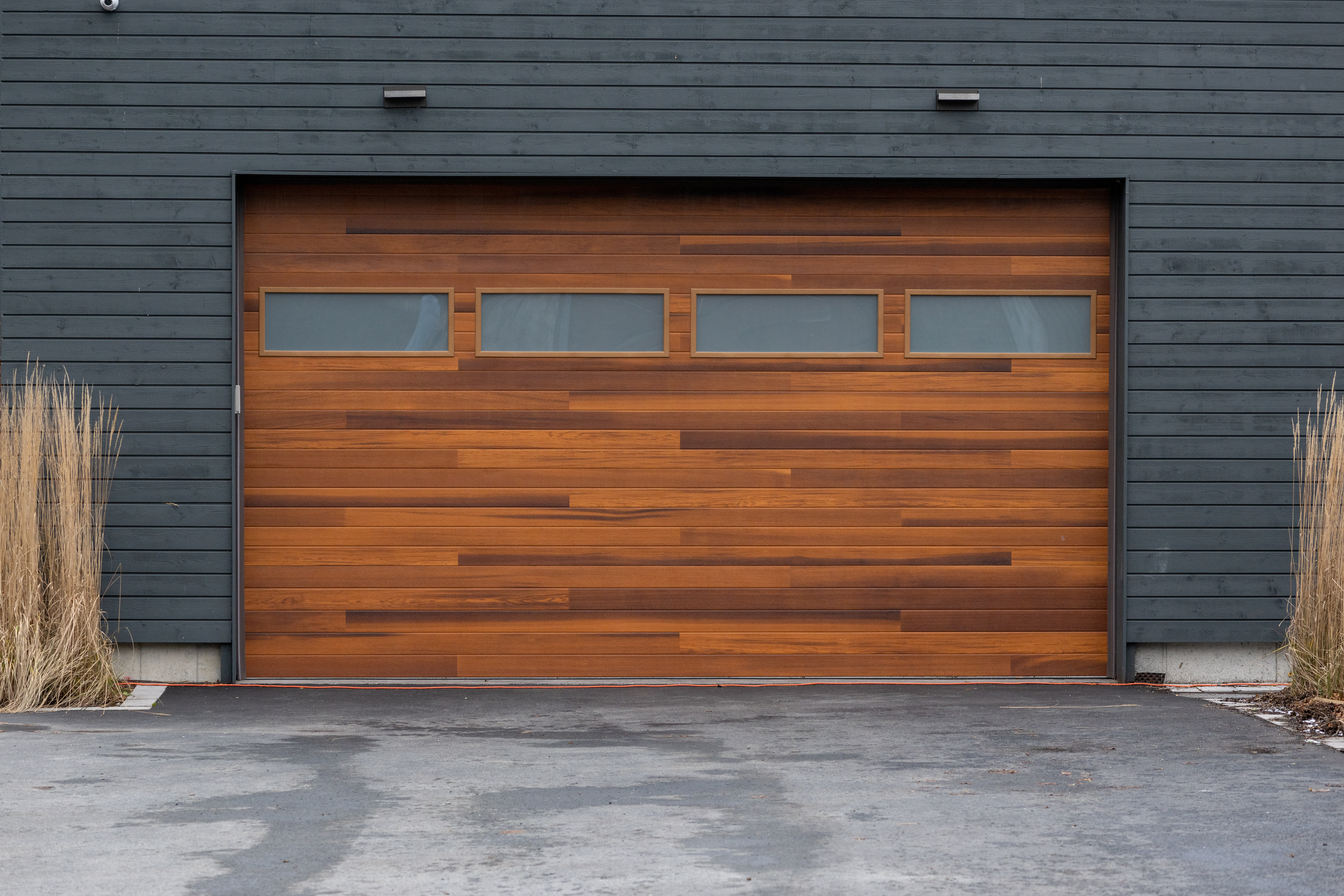
Contemporary garage doors typically feature horizontally arranged flat or flush panels, creating a streamlined appearance that visually lengthens the home and enhances symmetry. Many contemporary designs also incorporate glass panels either as narrow window bands across the top of the door or as full-view garage doors.
Modern Curb Appeal
With their clean lines and bold finishes, contemporary doors tend to instantly modernize a home’s aesthetic. This modern aesthetic is particularly appealing to today’s homeowners and buyers and can dramatically improve a home’s curb appeal and first impressions. These doors are additionally designed to feel cohesive with modern siding, windows, and other architectural elements and, therefore, make the garage feel like an intentional part of the home’s design rather than an afterthought.
Material Versatility
Contemporary garage doors are typically made of aluminum, steel, composite, glass, or faux-wood, while their frames are often metal with smooth or matte finishes.
- Aluminum is lightweight, corrosion- and rust-resistant, and ideal for modern designs
- Steel is a strong, low-maintenance, more durable option than aluminum with a similar look but a higher price tag.
- Composite materials offer the look of wood with lower maintenance requirements and improved resistance to moisture and warping.
- Glass adds natural light and a high-end aesthetic while maintaining privacy with frosted or tinted options.
Door hardware is either minimal or concealed in order to allow the door’s form and materials to take center stage. This inherent versatility allows homeowners to balance aesthetics, durability, and budget.
Energy Efficiency
Many styles of contemporary garage doors are available with insulation, making them a smart choice for attached garages or garages used as workspaces. Insulated doors help regulate interior temperatures, reduce energy loss, and minimize noise.
Low Maintenance
Unlike traditional or more ornate styles, contemporary garage doors are designed for easy upkeep because they typically lack the intricate designs and details found in other styles. Additionally, powder-coated metals and UV-stable finishes resist fading, peeling, and corrosion, which makes them ideal for homeowners who want long-term performance with minimal maintenance.
Typical Sizes
Contemporary garage doors are available in standard residential sizes to accommodate most residential homes. These sizes include:
- Single-Car Garages: Typically 8-9 ft wide x 7-8 ft tall
- Two Car/Double-Car Garages: Typically 16 ft wide x 7-8 ft tall
- Custom and Oversized Options: Available for larger garages or carriage-style bays
Since contemporary aesthetics rely on proportion and alignment, proper sizing is essential. The horizontal lines should visually align with windows, siding, or other architectural bands to maintain a balanced and cohesive appearance.
Best Climate for Contemporary Garage Door Styles
Contemporary garage doors can perform well in any climate so long as the materials are chosen appropriately.
Hot or Sunny Climates
In warmer areas, aluminum and steel doors with light or reflective finishes help reduce heat absorption. Additionally, insulated doors keep the heat out and the cool air in. UV-resistant coatings also prevent fading and surface damage from the sun.
Humid or Coastal Environments
For these environments, aluminum and composite materials are ideal because they resist rust, swelling, and corrosion. If choosing glass panels, they should be tempered and sealed properly to withstand moisture and salt exposure.
Cold or Variable Climates
Quality weather seals and insulated materials are vital in these climates because they enhance durability and energy efficiency by preventing drafts, condensation, and freeze-thaw damage.
Home Styles & Colors that Work Best
Modern and Contemporary Homes
Contemporary garage doors naturally complement modern architecture, including flat-roof homes, minimalist designs, and custom modern builds, because each prioritizes sleek lines, matte colors, and flush or minimal features. Full-view glass doors or flush steel panels tend to be especially popular in these settings.
Mid-Century Modern and Transitional Homes
Mid-century modern homes, characterized by clean, simple lines and typically functional, unadorned design, benefit from contemporary doors with their horizontal lines and warm tones. Transitional homes often use contemporary garage doors to bridge their traditional materials and style with modern simplicity and appeal to modern buyers.
Color and Finish Suggestions
Color plays a major role in the success and cohesion of a contemporary garage door. Popular options include:
- Matte black or charcoal for stark contrast
- Natural wood tones for warmth and balance
- White or gray for clean, minimalist exteriors
- Metallic or aluminum finishes for an industrial look
- Off-white for transitional homes to bridge styles
For the most cohesive and aesthetically balanced look, coordinate the color of the garage door with window frames, trim, or other architectural accents.