Key takeaways
- RV garage doors are typically 12 to 16 feet wide and 12 to 14 feet high, and custom sizes are available for larger RVs.
- North Carolina law caps vehicle height at 14 feet, so a 14-foot-high door opening fits the tallest RV allowed on the state’s roads.
- An RV garage door typically costs $1,500 to $4,000 before installation, and installation can add another $500 to $1,000.
- For an RV garage door, an R-value of 10 or higher is the insulation level to aim for.
An RV garage door is an oversized residential garage door, usually 12 to 16 feet wide and 12 to 14 feet tall, built to let a motorhome or travel trailer park indoors. As more people take up RV travel, a dedicated RV garage is becoming a must-have. RJ Garage Door Service installs RV doors across Raleigh, Durham, Cary, Fayetteville and the Triangle.
1. Which RV garage door type is right for you?
The RV garage door type that is right for you depends on your ceiling space, the room in front of the garage and your budget.
- Roll-up doors are space-savers. A roll-up door coils above the opening, so it suits a garage tight on ceiling space.
- Sectional doors are a popular choice, with horizontal panels that glide along tracks. Sectional doors come with good insulation options and look sleek.
- Swing-out doors open outward and give the garage a traditional barn-style look. You’ll need enough space in front of the garage for them to swing freely.
- Sliding doors move horizontally to open and are easy to use, but they take up wall space on one side.
2. How much will an RV garage door cost?
An RV garage door costs $1,500 to $4,000 on average, depending on size, material and customization. Typical ranges by door type are:
- A basic steel door runs $1,500 to $2,000.
- An insulated steel door runs $2,000 to $3,000.
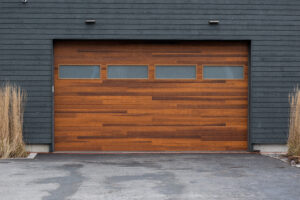
- A wood door runs $3,000 to $4,000.
- A custom high-end door runs $4,000 and up.
These prices usually don’t include installation, which can add another $500 to $1,000. Get a few quotes to find the best deal; RJ Garage Door Service gives free estimates.
3. Which material options work best for an RV garage door?
The material options that work best for an RV garage door are steel, aluminum, wood and fiberglass, and your choice depends on budget, climate and the look you want:
- Steel is durable, low-maintenance and cost-effective, and a favorite for many homeowners.
- Aluminum is lightweight and rust-resistant, which suits wet climates.
- Wood gives a classic, luxurious look, but it needs more upkeep.
- Fiberglass is lightweight and customizable, but it may crack in extreme temperatures.
4. How does insulation keep an RV garage comfortable and energy efficient?
Insulation keeps an RV garage comfortable and energy efficient by slowing heat flow through a very large door. An insulated door is worth it if your garage doubles as a workspace. Insulated doors:
- Keep the garage temperature stable.
- Reduce energy costs by preventing heat loss or gain.
- Cut noise, which helps if you live on a busy street.
Look for doors with a high R-value (a measure of insulation effectiveness). For RV garage doors, an R-value of 10 or higher is ideal. If the garage is detached, unheated and only stores the RV, a basic uninsulated steel door is a reasonable way to save money.
5. What RV door sizes are available, and is bigger better?
RV door sizes are typically 12 to 16 feet wide and 12 to 14 feet high. The common ranges are:
- Width of 12 to 16 feet
- Height of 12 to 14 feet
Measure your RV, including any roof attachments such as air conditioners and antennas, and leave extra clearance for easy parking. North Carolina law sets the maximum vehicle height at 14 feet and the maximum width at 102 inches (N.C. General Statute 20-116), so a 14-foot door covers any RV legally driven in the state, while a 12-foot door may be too short for a large Class A motorhome. Custom sizes are available if your RV is larger than average.
6. How do you keep an RV garage door durable and looking great?
You keep an RV garage door durable and looking great with the right material and routine care. Steel and aluminum are known for durability, but they need occasional cleaning to prevent rust or corrosion. Wood doors are beautiful but need regular sealing or painting to protect them from weather damage.
Routine maintenance like lubricating the tracks and checking the springs extends your door’s lifespan. Schedule an annual inspection with a professional to catch problems early.
7. How do you keep an RV garage door’s noise level down?
You keep an RV garage door’s noise level down by choosing an insulated door, a quiet opener and nylon rollers. Modern RV garage doors come with quieter operating systems, which helps if you’re an early riser or have neighbors close by. Look for:
- Insulated doors, which naturally reduce noise.
- Quiet openers, such as belt-drive models.
- Nylon rollers, which create less friction than metal ones.
For a free estimate on an RV garage door in the Raleigh area, call RJ Garage Door Service at (919) 438-7447.