
Topics Covered:
You’ve replaced the light bulbs. You’ve programmed the thermostat. You’ve sealed the windows. Yet your energy bills keep climbing, and you can’t figure out why. For many Cary homeowners, the answer sits right in front of them every time they pull into the driveway. That garage door you’ve owned for fifteen years might be costing you hundreds of dollars annually in wasted heating and cooling. And the problem goes far beyond the door itself.
Why Is Your Garage Door the Biggest Energy Leak in Your Home?
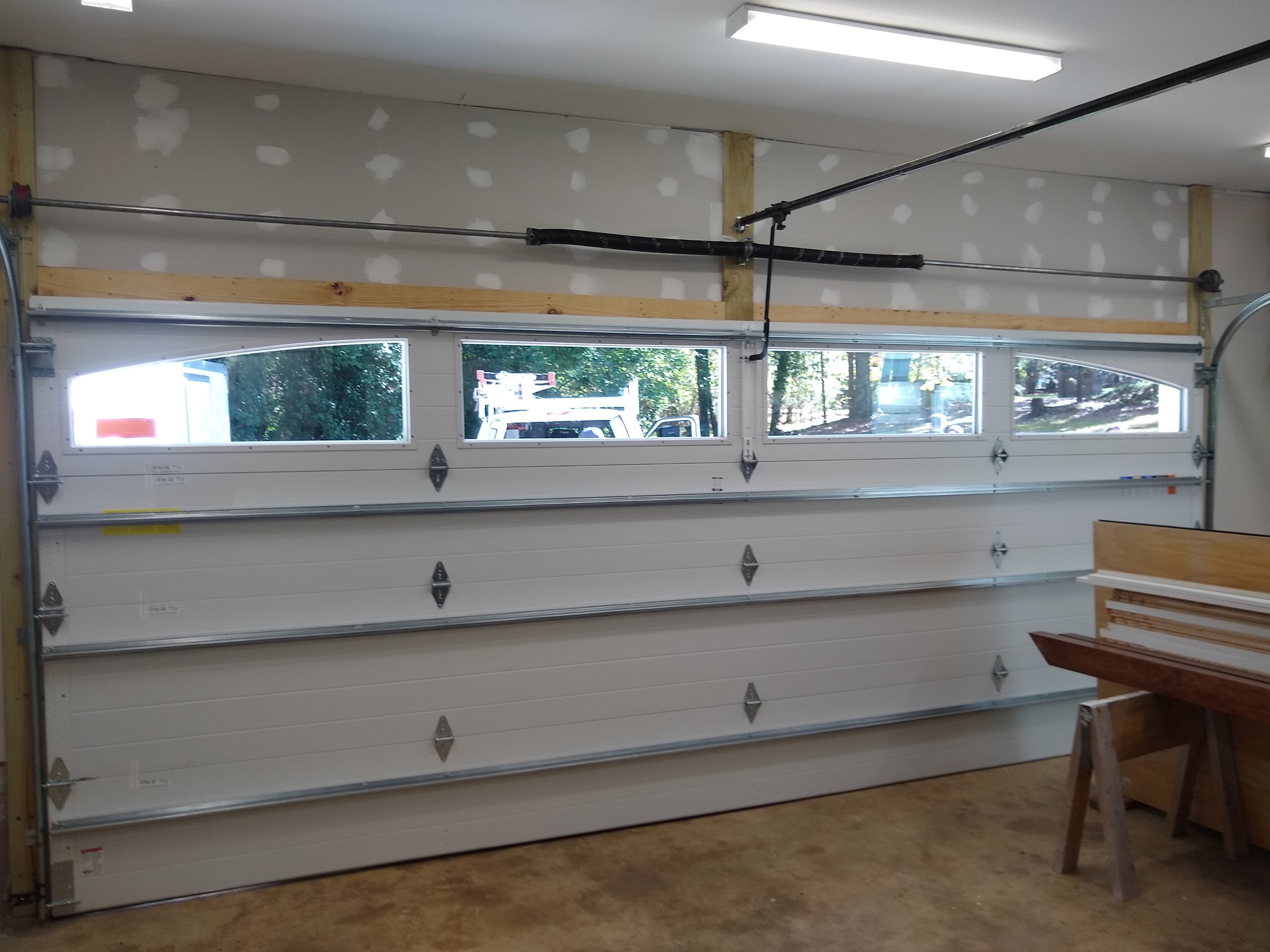
Your garage door is likely the largest opening in your home’s exterior. A standard two-car garage door spans 16 feet wide and 7 feet tall, creating over 110 square feet of surface area between your home and the outside world. When that surface lacks proper insulation or sealing, it becomes a massive pathway for heat transfer. In summer, your garage absorbs solar radiation and can reach temperatures 15 to 20 degrees higher than the outdoor air. In winter, an uninsulated door allows cold air to flood the space, dropping temperatures well below freezing on the coldest nights.
The energy impact extends far beyond the garage itself. If you have an attached garage, which most Cary homes do, that superheated or frigid air doesn’t stay contained. It transfers through the shared walls between your garage and living spaces. It rises through the floor into rooms above the garage. Your HVAC system works overtime trying to compensate, running longer cycles and consuming more electricity or gas to maintain your thermostat setting.
Research from Clopay Building Products found that replacing an older garage door with an energy-efficient insulated model can reduce energy loss through the garage by up to 71 percent. The Department of Energy notes that gaps and leaks in a home’s envelope, which includes the garage door, can increase energy consumption by as much as 30 percent in extreme cases. That’s not a minor inefficiency. That’s a significant portion of your monthly utility bill walking right out the door.
How Uninsulated Garage Doors Affect Your Energy Bills:
- Direct heat transfer through the door: Single-layer steel or aluminum doors conduct temperature from outside to inside with almost no resistance
- Air infiltration through gaps and worn seals: Even small openings around the door perimeter allow conditioned air to escape and outside air to enter
- Radiant heat absorption in summer: Dark-colored doors absorb solar energy and radiate heat into the garage space throughout the day
- Thermal bridging to living spaces: Shared walls between the garage and house transfer temperature directly into your conditioned living areas
- Impact on rooms above the garage: Bedrooms and bonus rooms over garages experience temperature extremes that strain your HVAC system
- Extended HVAC run times: Your heating and cooling equipment works harder and longer to compensate for garage-related temperature fluctuations
Temperature Impact of Garage Door Insulation:
| Door Type | Summer Garage Temp (95°F Day) | Winter Garage Temp (30°F Day) | Impact on Adjacent Rooms |
|---|---|---|---|
| Single-layer uninsulated | 110-120°F | 32-38°F | Severe temperature transfer |
| Polystyrene insulated (R-6 to R-9) | 95-105°F | 38-45°F | Moderate improvement |
| Polyurethane insulated (R-12 to R-18) | 85-95°F | 45-55°F | Significant improvement |
What Does R-Value Mean and Why Should You Care?
R-value measures a material’s resistance to heat flow. The higher the R-value, the better the material insulates. When shopping for garage doors, R-value tells you how effectively the door will block heat transfer between the outside environment and your garage space. This number directly correlates with energy savings and comfort.
Uninsulated single-layer garage doors have essentially zero R-value. They provide almost no resistance to temperature transfer. A steel door without insulation heats up in the sun and conducts that heat directly into your garage. At night, it cools rapidly and pulls heat out of the space. Your garage becomes an oven in summer and a refrigerator in winter.
Insulated doors use foam cores sandwiched between steel layers to dramatically increase R-value. The two primary insulation materials are polystyrene and polyurethane. Polystyrene panels, similar to the white foam in packaging materials, typically achieve R-values between 6 and 9. Polyurethane foam, injected between door layers where it expands and bonds, achieves R-values from 12 to 18 or higher. The difference in thermal performance is substantial.
“We see homeowners spend thousands on new windows and attic insulation while ignoring the 110-square-foot hole in their thermal envelope. An insulated garage door with proper weather sealing often delivers better return on investment than almost any other energy improvement. The payback period can be as short as three to five years through reduced utility bills alone.” – Team at RJ Garage Door Services
Understanding Insulation Materials:
- Polystyrene (EPS) panels: Foam boards placed inside door panels, provides good insulation at lower cost, R-6 to R-9 typical range
- Polyurethane foam: Injected liquid that expands to fill entire cavity, bonds to door surfaces, superior thermal performance with R-12 to R-18
- Triple-layer construction: Steel exterior, foam core, steel interior creates strongest thermal barrier and adds structural rigidity
- Thermal breaks: Separation between interior and exterior door components that prevents temperature conduction through the frame
Insulation Comparison for Garage Doors:
| Insulation Type | Typical R-Value | Energy Savings Potential | Best Application |
|---|---|---|---|
| None (single layer) | 0 | Baseline | Detached garages in mild climates only |
| Polystyrene panels | R-6 to R-9 | Moderate (10-15%) | Budget-conscious, moderate climate |
| Polyurethane foam | R-12 to R-18 | Significant (15-20%) | Attached garages, rooms above garage |
| High-performance polyurethane | R-18+ | Maximum (20%+) | Climate-controlled garages, workshops |
Are Worn Weather Seals Silently Draining Your Wallet?
Even a well-insulated door won’t save energy if air flows freely around its edges. Weather stripping and seals create the barrier that keeps conditioned air inside and outside air where it belongs. When these seals deteriorate, crack, or compress beyond recovery, your garage becomes a sieve that lets energy pour out year-round.
The bottom seal takes the most abuse. It contacts the concrete floor with every opening and closing cycle, gets compressed by the door’s weight, and endures exposure to rain, snow, dirt, and debris. Over time, rubber deteriorates, loses flexibility, and develops gaps that allow air infiltration. A worn bottom seal can create an opening spanning the entire 16-foot width of your door, letting cold air rush in during winter and hot air enter during summer.
Side and top seals face different challenges. They compress against the door frame when closed and must maintain contact despite seasonal expansion and contraction of door components. UV exposure degrades rubber and vinyl materials. Temperature cycling causes them to become brittle and crack. Once these seals fail, every gust of wind pushes outside air directly into your garage.
Signs Your Weather Seals Need Replacement:
- Visible daylight around the closed door: Light gaps indicate air gaps, and every ray of light represents conditioned air escaping
- Drafts felt near the garage door: Air movement indicates failed seals allowing infiltration
- Water or moisture entering after rain: Gaps large enough for water easily allow air passage
- Insects or rodents finding their way in: Pests exploit the same gaps that waste energy
- Cracked, brittle, or hardened seal material: Aged rubber loses flexibility and can no longer compress properly
- Seal no longer rebounds after compression: Material that stays flat has lost its sealing capability
- Bottom seal dragging or bunching: Damaged seals create uneven contact with the floor
“I tell homeowners to do the daylight test once a year. Close the garage door on a sunny day, turn off the lights, and look for any light coming through. If you see light, you’re losing energy. Most people are surprised at how much daylight they find around doors they thought were sealed tight.” – Team at RJ Garage Door Services
Is the Room Above Your Garage Always Too Hot or Too Cold?
If you have a bedroom, home office, or bonus room above your garage, you’ve probably noticed it’s never quite comfortable. Too hot in summer, too cold in winter, and impossible to regulate no matter how you adjust the thermostat. This problem traces directly back to the garage below and, frequently, to an uninsulated or poorly sealed garage door.
Rooms above garages face a unique thermal challenge. Unlike other rooms that share walls with conditioned spaces, these rooms often have three or more surfaces exposed to unconditioned areas. The floor sits above an unconditioned garage. Exterior walls face outside. Ceiling and knee walls may border unconditioned attic space. The result is a room surrounded by temperature extremes on nearly every side.
Your HVAC system wasn’t designed for this level of thermal stress. Standard ductwork calculations assume rooms share walls with other conditioned spaces. When a room above the garage needs far more heating or cooling capacity than the system provides, the temperature suffers. Your system runs longer trying to satisfy that thermostat, consuming more energy and still failing to achieve comfort.
An insulated garage door addresses one major face of this problem. By moderating garage temperatures, an insulated door reduces the temperature differential between the garage and the room above. The floor of that bedroom or office no longer sits above a space that swings from freezing to sweltering. Your HVAC system has an easier job, runs less often, and your energy bills reflect the improvement.
Why Rooms Above Garages Have Temperature Problems:
- Multiple surfaces exposed to unconditioned space: Floor over garage, exterior walls, and often ceiling against attic create thermal vulnerability
- Inadequate floor insulation: Builders frequently under-insulate the cavity between garage ceiling and room floor
- Insufficient HVAC airflow: Ductwork often doesn’t account for the extra heating and cooling load these rooms require
- Distance from HVAC equipment: Long duct runs lose conditioned air before reaching distant bonus rooms
- Heat rising from hot garage: Summer garage temperatures of 110°F or higher radiate through the floor
- Cold air sinking from frigid garage: Winter garage temperatures near freezing pull heat down from the room above
How Much Can an Insulated Garage Door Actually Save You?
The energy savings from upgrading to an insulated garage door vary based on your current door, climate, home design, and energy prices. Homeowners with attached garages typically see the greatest benefit because the garage directly affects adjacent living spaces. Studies and real-world experience suggest savings of 15 to 20 percent on heating and cooling costs are achievable for homes with attached garages.
For a typical Cary home spending $200 monthly on heating and cooling, a 15 percent reduction translates to $30 per month or $360 annually. Over a ten-year door lifespan, that represents $3,600 in energy savings alone. Factor in improved comfort, reduced HVAC wear, and potential home value increase, and the investment becomes even more attractive.
The savings multiply when you combine an insulated door with proper weather sealing. An insulated door with failed seals still allows significant air infiltration. Addressing both the door’s thermal resistance and its air sealing capability maximizes energy savings and comfort improvement.
“Energy savings are real, but comfort might be the bigger win for most families. When the room above the garage finally holds temperature, when you stop feeling drafts in the kitchen, when your HVAC system takes a break instead of running constantly, that’s when homeowners tell us they should have upgraded years earlier.” – Team at RJ Garage Door Services
Estimated Annual Energy Savings by Upgrade Type:
| Upgrade | Estimated Annual Savings | Typical Cost | Payback Period |
|---|---|---|---|
| Weather seal replacement only | $50-150 | $100-300 | 1-2 years |
| Insulated door (polystyrene) | $150-300 | $800-1,500 | 3-6 years |
| Insulated door (polyurethane) | $250-400 | $1,200-2,500 | 4-7 years |
| Complete system (door + seals + installation) | $300-500 | $1,500-3,000 | 4-8 years |
What Should You Look For When Choosing an Energy-Efficient Garage Door?
Selecting the right garage door for energy efficiency involves more than checking the R-value number. Construction quality, seal design, and proper installation all contribute to real-world performance. A high R-value door installed poorly with gaps around the frame won’t deliver the energy savings its specifications promise.
Start with insulation type. Polyurethane foam provides superior thermal performance compared to polystyrene panels. The foam bonds directly to door panels, eliminating air pockets and adding structural strength. This bonding also helps the door maintain its insulating properties over time, while loose polystyrene panels can shift or compress with repeated cycling.
Look for multi-layer construction. The best insulated doors feature steel skins on both the exterior and interior with foam insulation between. This triple-layer design maximizes thermal resistance while creating a more rigid, durable door. Single-skin doors with insulation only on the back don’t perform as well and tend to dent more easily.
Consider the entire door system. The best door panel means little if the weatherstripping allows air to flow freely around it. Quality doors include durable weather seals on all four sides, plus thermal breaks in the hardware to prevent heat conduction through metal components. Ask about the complete package, not just the panel R-value.
Features to Prioritize for Energy Efficiency:
- Polyurethane foam insulation: Superior R-value per inch and better long-term performance than polystyrene
- Triple-layer construction: Steel-foam-steel sandwich provides maximum thermal resistance and durability
- Thermal break technology: Prevents metal components from conducting heat between interior and exterior
- Quality weather seals on all sides: Factory-installed seals that maintain flexibility and compression over time
- Durable bottom seal system: Heavy-duty seal with proper retainer channel that won’t fail prematurely
- Professional installation: Proper fitting and adjustment to maximize seal contact and minimize gaps
Can Simple Maintenance Improve Your Current Door’s Efficiency?
If a new door isn’t in the immediate budget, regular maintenance can improve your existing door’s energy performance. Even older doors benefit from attention to seals, gaps, and operating condition. These maintenance steps won’t transform an uninsulated door into an energy champion, but they can reduce waste and improve comfort.
Start with a visual inspection of all weather seals. Check the bottom seal for cracks, gaps, and loss of flexibility. Examine side and top seals for deterioration, separation from the frame, or compression that prevents proper contact. Replace any seals showing wear before another heating or cooling season arrives.
Look for gaps where light or air can enter. Close the door during daylight hours, turn off garage lights, and check for any light visible around the door perimeter. Feel along the edges for drafts. Any gap large enough to see light or feel air movement is large enough to waste significant energy.
Test the door’s operation and adjustment. A door that doesn’t close completely or sits unevenly on the floor creates gaps that waste energy. Springs, cables, and tracks that need adjustment can prevent proper sealing. A maintenance tune-up addresses these issues while also improving safety and extending door life.
Maintenance Steps That Improve Energy Efficiency:
- Replace worn weather seals: New seals restore the air barrier that prevents infiltration and energy loss
- Adjust door balance and alignment: Proper adjustment ensures complete contact between door and seals on all sides
- Seal gaps around the door frame: Caulk or foam around frame penetrations prevents air leakage through the structure
- Add threshold seal if needed: Creates secondary barrier at the floor for doors with uneven concrete or worn bottom seals
- Insulate walls shared with the house: Address any gaps or insufficient insulation in the wall between garage and living space
- Check door-to-house entry door: The interior door from garage to house should seal as well as any exterior door
“Before investing in a new door, have your current system evaluated. Sometimes $200 in seal replacement and adjustment delivers significant improvement. Other times, the door is simply past its useful life for energy efficiency. We help homeowners understand which approach makes sense for their specific situation.” – Team at RJ Garage Door Services
Taking Control of Your Home’s Energy Future
That garage door you pass by every day plays a larger role in your energy bills than most homeowners realize. Whether you’re dealing with utility costs that have crept steadily higher, rooms that never reach comfortable temperatures, or an HVAC system that seems to run constantly, the garage door deserves investigation.
The solution might be as simple as replacing worn weather seals to restore your door’s air barrier. It might involve upgrading to a properly insulated door that transforms your garage from an energy liability into an efficient part of your home’s thermal envelope. Either way, addressing garage door efficiency typically delivers meaningful returns in comfort, savings, and home value.
If you need help with residential garage door installation or want to explore energy-efficient options for your Cary home, contact RJ Garage Door Services. Our technicians can evaluate your current door’s condition, identify energy-wasting problems, and recommend solutions that fit your budget and goals.