Topics Covered:
Scheduling a garage door repair can feel uncertain when you don’t know what to expect. Will the technician show up on time? Can you trust the diagnosis? Will you face surprise charges after the work is done? At RJ Garage Door Service, we believe transparency eliminates anxiety and builds lasting relationships with our customers. Understanding exactly what happens during a professional service call helps you feel confident and prepared from the moment you schedule an appointment until your door operates smoothly again.
Before the Technician Arrives: Setting the Stage
Your service experience begins before anyone knocks on your door. After scheduling your appointment, you’ll receive confirmation through your preferred communication method, whether that’s text message, email, or phone call. This confirmation includes your appointment window, the service address, and details about what to expect. We understand that your time matters, which is why we commit to arrival windows rather than vague time frames that leave you waiting around all day.
On the day of your appointment, proactive communication continues. You’ll receive a notification when your technician is on the way, complete with their photo, name, and an estimated arrival time. This advance notice allows you to prepare your space and know exactly who will be arriving at your home. You can track your technician’s location in real time, similar to how food delivery services work. This level of transparency removes the guesswork and demonstrates respect for your schedule.
We also recommend taking a few minutes to prepare your garage before the technician arrives. Clear any vehicles, stored items, or debris from the immediate area around the garage door. This preparation allows the technician to work efficiently and reduces the overall service time. If you’ve noticed specific symptoms like unusual noises, jerking movements, or particular times when the problem occurs, jot down these details. Sharing this information helps the technician diagnose issues more quickly and accurately.
Safety verification remains a top priority for professional service companies. When you receive the pre-arrival notification with your technician’s photo, you gain the ability to verify their identity upon arrival. Legitimate service professionals arrive in clearly branded vehicles, wear company uniforms, and carry photo identification badges. This multi-layered verification process protects you and ensures you’re working with qualified professionals rather than unlicensed contractors.
When Our Technician Arrives: First Impressions Matter
The moment our technician arrives at your property sets the tone for the entire service experience. Professional garage door technicians understand that they’re entering your personal space and treat your home with respect. You’ll see a clearly marked RJ Garage Door Service vehicle pull into your driveway, and your technician will approach your front door rather than entering through the garage without permission. This courtesy demonstrates professionalism and allows you to feel comfortable granting access to your property.
After knocking on your door, the technician will introduce themselves and present their photo identification badge. This verification step might seem simple, but it provides crucial peace of mind. You’re welcoming someone into your home, and confirming their identity protects both you and the company. Once you’ve verified their credentials, the technician will ask about the issues you’ve been experiencing with your garage door. This initial conversation helps them understand your concerns before beginning any physical inspection.
The technician will also explain the process that’s about to unfold. You’ll learn that they’ll conduct a comprehensive safety inspection, identify any problems, provide a detailed diagnosis, and offer pricing options before performing any work. This upfront explanation ensures you understand each step and feel comfortable with the process. Professional technicians recognize that many customers have limited knowledge about garage door systems, so they use plain language rather than technical jargon that creates confusion.
During this initial interaction, the technician will also discuss your specific concerns and ask clarifying questions. If your door has been making grinding noises, they’ll want to know when those noises started and whether they occur during opening, closing, or both. If the door struggles to open, they’ll ask whether it fails to start or begins moving then stops. These detailed questions help narrow down potential causes before the physical inspection begins, allowing for a more efficient diagnostic process.
Key elements of a professional arrival include:
- Branded vehicle and uniform: Clear company identification builds trust and confirms legitimacy
- Photo ID verification: Protects homeowners by confirming technician identity
- Respectful entry: Knocking and waiting for permission before accessing garage space
- Initial consultation: Discussion of symptoms and concerns before beginning work
- Process explanation: Clear outline of what will happen during the service call
The Comprehensive Safety Inspection Process
After the initial consultation, your technician begins the most critical phase of the service call: the comprehensive safety inspection. At RJ Garage Door Service, our technicians perform a detailed 25-point inspection on every service call, regardless of why you originally contacted us. You might have called about a noisy door, but that noise could indicate a small problem or a symptom of a larger issue that could cause dangerous failures if left unaddressed. The inspection ensures we identify all potential concerns and prioritize your safety above everything else.
The inspection follows a systematic approach that examines every component of your garage door system. Your technician will start by testing the door’s balance, which involves disengaging the opener and manually lifting the door halfway. A properly balanced door stays in place when released, while an imbalanced door drifts down or shoots upward. This balance test reveals problems with spring tension that could strain your opener or create safety hazards. The technician will explain what they’re doing as they work through each checkpoint, helping you understand why each test matters.
Spring and cable inspection receives particular attention because these components operate under extreme tension and represent the most common failure points in garage door systems. The technician will visually examine springs for signs of wear, rust, or stretching that indicates weakness. They’ll check that containment cables run through extension springs to prevent them from becoming projectiles if they break. Cable inspection includes looking for fraying, proper tension, and secure connections at drums and brackets. These high-stress components require expert evaluation because spring and cable failures can cause serious injuries or property damage.
Safety feature testing forms another crucial element of the inspection. Federal regulations mandate that all garage door openers manufactured since 1993 include automatic reversal systems to prevent entrapment. Your technician will test both the contact reversal feature and the photo eye sensors. The contact test involves placing an object in the door’s path and verifying that the door immediately reverses upon touching it. The photo eye test confirms that breaking the invisible beam between sensors causes the door to stop and reverse. These safety features protect children, pets, and adults from potentially fatal accidents.
“We approach every service call with the mindset that safety comes first, repairs come second,” explains the team at RJ Garage Door Service. “That 25-point inspection might seem thorough, but garage doors weigh hundreds of pounds and operate under tremendous tension. Missing a worn cable or weak spring could lead to catastrophic failure that puts families at risk. We’d rather spend extra time during inspection than receive a call about an injury that could have been prevented.”
Our 25-point safety inspection examines these critical systems:
| Inspection Category | Key Checkpoints | Why It Matters |
|---|---|---|
| Door Balance and Operation | Manual lift test, door balance, smooth operation | Prevents strain on opener and ensures safe manual operation |
| Spring System | Spring tension, cable condition, containment cables | Critical for preventing dangerous spring failures |
| Track and Roller Assembly | Track alignment, roller wear, lubrication needs | Eliminates binding and reduces wear on components |
| Hardware and Fasteners | Hinge condition, bracket security, bolt tightness | Prevents door failure and maintains structural integrity |
| Safety Features | Auto-reverse function, photo eye sensors, emergency release | Protects people and property from entrapment hazards |
| Opener System | Motor operation, chain/belt tension, remote function | Ensures reliable daily operation and longevity |
| Environmental Factors | Weather stripping, seal integrity, rust/corrosion | Maintains energy efficiency and prevents deterioration |
Clear Diagnosis and Transparent Pricing
After completing the comprehensive inspection, your technician transitions from diagnostic mode to education mode. Rather than simply telling you what needs to be fixed, professional technicians take time to show you the problems they’ve identified. If a spring shows signs of wear, they’ll point out the gaps between coils or areas of rust that indicate weakness. If rollers are cracked or worn, they’ll demonstrate how the damage affects door movement. This visual education helps you understand that recommended repairs address real problems rather than manufactured needs designed to inflate bills.
The diagnosis explanation uses clear language that makes sense to people without technical expertise. Your technician will avoid industry jargon and acronyms, instead describing issues in terms of what they mean for your daily life. Rather than saying your door has “reduced spring cycle capacity,” they’ll explain that your springs have reached the end of their lifespan and could break soon, leaving you unable to open your garage door and potentially causing damage or injury when failure occurs. This practical explanation helps you understand the urgency and importance of recommended repairs.
Before performing any work, your technician will provide a detailed, upfront quote that breaks down exactly what you’ll pay. This transparency represents a fundamental difference between professional service companies and less reputable contractors who provide vague estimates then present inflated bills after completing work. Your quote includes itemized labor charges, specific parts with individual pricing, warranty information, and the expected timeline for completion. You’ll know exactly what you’re paying for and why each component costs what it does.
Professional service companies also present multiple options when possible, empowering you to make decisions based on your budget and priorities. If your springs need replacement, the technician might offer both standard springs with a typical lifespan and high-cycle springs that cost more upfront but last significantly longer. They’ll explain the tradeoffs between these options without pressure or judgment about which choice you make. If your door has multiple issues, they’ll help you understand which repairs are critical for safety and which can be deferred if budget constraints require prioritization.
The quote review also includes discussion of warranty coverage for both parts and labor. Quality service companies stand behind their work with written warranties that protect you if something goes wrong after the repair. Your technician will explain what the warranty covers, how long it lasts, and what steps you need to take if you need to use it. This warranty discussion demonstrates confidence in both the quality of parts used and the skill of the technicians performing the work.
“Transparency builds trust, and trust creates long-term customer relationships,” notes the RJ Garage Door Service team. “We want customers who come back to us for maintenance and future repairs, recommend us to their neighbors, and leave positive reviews online. That only happens when people feel confident they received honest service at fair prices. Hidden fees and surprise charges might generate short-term profits, but they destroy reputation and eliminate repeat business.”
Components included in your transparent upfront quote:
| Quote Component | What You’ll See | Transparency Benefit |
|---|---|---|
| Labor Costs | Itemized labor charges based on repair complexity | No hidden hourly fees or surprise charges |
| Parts and Materials | Specific parts needed with individual pricing | Quality parts specifications clearly explained |
| Warranty Information | Coverage duration for parts and workmanship | Peace of mind for future performance |
| Service Timeline | Expected completion time for the repair | Helps you plan your day accordingly |
| Alternative Options | Different repair approaches at various price points | Empowers you to make informed decisions |
The Repair Process: Professional Work You Can Trust
Once you approve the estimate and authorize work to begin, your technician shifts into repair mode. Professional technicians carry fully stocked service vehicles that contain the most commonly needed parts and tools. This preparation means that most repairs can be completed during the initial service call rather than requiring a second appointment after ordering parts. The technician will retrieve the necessary components from their vehicle and organize their workspace to work efficiently while maintaining safety throughout the process.
During repairs, professional technicians follow manufacturer specifications and industry best practices. They use the correct tools for each task rather than improvising with makeshift solutions that might work temporarily but create long-term problems. When replacing springs, they ensure proper tension that balances the door weight. When installing new rollers, they verify that track alignment allows smooth movement. When adjusting opener settings, they calibrate force limits and travel distances according to your specific door. This attention to detail separates professional service from amateur work that might address immediate symptoms without solving underlying issues.
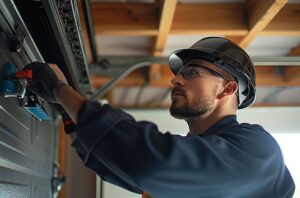
Safety protocols guide every aspect of the repair process. Garage door springs store tremendous energy, and improper handling during installation or removal can cause serious injuries. Professional technicians use specialized tools designed for safe spring work and follow procedures that minimize risk. They disconnect openers before working on doors to prevent accidental activation. They secure doors in the open position when working underneath them. They wear appropriate safety equipment including gloves and eye protection. These precautions protect both the technician and your property from accidents during repair work.
Throughout the repair process, your technician remains available to answer questions and provide updates on progress. If they discover additional issues while performing the approved work, they’ll stop and discuss these findings with you before proceeding. This ongoing communication ensures you never receive surprise charges for work you didn’t authorize. Professional service companies recognize that your home and your budget deserve respect, which means obtaining explicit approval before expanding the scope of repairs beyond the original estimate.
Quality control happens continuously during repairs rather than only at the end. After installing each component, the technician verifies proper function and fit. They check that springs are tensioned correctly, that rollers move smoothly in tracks, that sensors align properly, and that all hardware is securely fastened. This incremental verification catches problems immediately rather than discovering them during final testing when corrections would require rework. The methodical approach might take slightly longer than rushed repairs, but it ensures everything functions correctly the first time.
Professional repair work includes these quality standards:
- Manufacturer-approved parts: Components designed specifically for your door type and weight
- Proper tools and equipment: Specialized tools that enable safe, effective repairs
- Industry best practices: Techniques developed through experience and training
- Safety protocols: Procedures that protect people and property during repair work
- Incremental verification: Testing each component as it’s installed to ensure proper function
- Clean work habits: Organized workspace that prevents damage to your garage and belongings
Safety Testing Upon Completion
After completing all repair work, professional technicians perform comprehensive safety testing before considering the job finished. This final verification ensures that repairs have been completed correctly and that your garage door system operates safely. The testing process examines the same safety features checked during the initial inspection, but now the technician verifies that everything functions according to specifications after repairs have been made. This thorough approach catches any issues before the technician leaves your property.
The automatic reversal test forms the cornerstone of safety verification. Your technician will place a solid object approximately 1.5 inches high in the door’s path and activate the closer. When the door contacts this object, it should immediately stop and reverse direction. If the door continues to close or doesn’t reverse promptly, the force settings need adjustment to prevent potential entrapment hazards. The technician will fine-tune these settings until the door responds appropriately to obstruction, protecting people and pets from injury.
Photo eye sensor testing confirms that the invisible infrared beam functions correctly. With the door fully open, the technician will activate the closer and then break the sensor beam by waving an object through it. The door should immediately stop and reverse when the beam is interrupted, even before making contact with anything. This feature provides the first line of defense against entrapment by detecting objects or people in the door’s path. Proper sensor alignment and function are critical safety requirements that must be verified after any repair work.
Door balance testing after repairs ensures that spring tension has been set correctly. The technician will disengage the opener and manually lift the door to various positions. A properly balanced door stays in place wherever it’s positioned rather than drifting down or shooting upward. Correct balance reduces strain on the opener motor, extends the lifespan of all components, and allows safe manual operation if you need to open the door during a power outage. This balance verification proves that spring installation and adjustment have been performed correctly.
Operational testing rounds out the safety verification process. The technician will open and close your door multiple times using both the wall button and remote controls. They’ll listen for unusual noises that might indicate problems, watch for smooth movement without jerking or hesitation, and verify that the door reaches the fully open and fully closed positions correctly. They’ll test the emergency release mechanism to ensure you can manually operate the door if needed. This comprehensive operational test confirms that every aspect of your garage door system functions as intended.
Final safety testing verifies these critical functions:
- Contact reversal response: Door stops and reverses when it touches an obstruction
- Photo eye sensor operation: Door reverses when invisible beam is interrupted
- Door balance verification: Door stays in place when manually positioned at any height
- Smooth operation: Door opens and closes without binding, jerking, or unusual noises
- Emergency release function: Manual operation works correctly if needed
- Opener performance: Remote and wall controls operate door reliably
Cleanup, Documentation, and Your Next Steps
Professional service companies understand that the job isn’t finished until your garage looks as clean as it did before the technician arrived. After completing repairs and safety testing, your technician will remove all debris, packaging materials, and old parts from your property. They’ll sweep the garage floor if repairs created dust or small debris. They’ll dispose of removed components responsibly rather than leaving them for you to handle. This cleanup demonstrates respect for your space and ensures you can use your garage immediately without additional work on your part.
Before leaving, your technician will provide a detailed walkthrough of the work performed and recommendations for ongoing maintenance. They’ll show you what was replaced, explain how the new components function, and point out any areas that might need attention in the future. This education helps you understand what happened during the service call and prepares you to recognize early warning signs of future problems. Professional technicians want you to catch issues early rather than waiting until complete failures require more expensive repairs.
Documentation provides important records for your files and future reference. You’ll receive an invoice that details all work performed, parts installed, and charges incurred. This documentation includes warranty information for parts and labor, so you’ll know exactly what’s covered and for how long. If you need to file an insurance claim or provide service records when selling your home, this documentation proves that professional maintenance and repairs have been performed. Professional service companies also maintain digital records of your service history, making it easy to reference past work during future service calls.
Your technician will also discuss recommended maintenance schedules based on your door’s age, usage patterns, and condition. Most residential garage doors benefit from annual professional maintenance that includes lubrication, hardware tightening, and system testing. However, doors that see heavy use or operate in harsh weather conditions might need more frequent attention. The technician will provide honest recommendations based on your specific situation rather than pushing unnecessary service contracts. You’ll leave the appointment with clear information about when you should schedule future maintenance to keep your garage door operating reliably.
Payment options provide flexibility and convenience at the conclusion of your service call. Professional companies accept multiple payment methods including cash, checks, and major credit cards. You’ll receive a detailed receipt immediately upon payment, and electronic copies will be sent to your email address for your records. Some companies also offer financing options for larger repairs or door replacements, allowing you to address necessary work without depleting emergency savings. Payment processing is straightforward and transparent, with no hidden fees or surprise charges beyond the approved estimate.
What happens during the final walkthrough:
| Phase | Duration | What Happens |
|---|---|---|
| Pre-Arrival Communication | 5-10 minutes | Text/call notification with technician photo and ETA |
| Initial Greeting and Assessment | 5-10 minutes | ID verification, initial problem discussion |
| Safety Inspection | 15-20 minutes | Complete 25-point inspection of door system |
| Diagnosis and Quote Review | 10-15 minutes | Detailed explanation of findings and pricing options |
| Repair Work | 30-90 minutes | Professional repairs with quality parts |
| Final Safety Testing | 10-15 minutes | Auto-reverse test, balance check, operation verification |
| Cleanup and Walkthrough | 5-10 minutes | Area restoration and maintenance recommendations |
Experience Professional Garage Door Service You Can Trust
Understanding what happens during a professional service call transforms the experience from uncertain to empowering. When you know that your technician will arrive on time, verify their identity, perform a comprehensive safety inspection, provide transparent pricing, complete quality repairs, and conduct thorough safety testing before leaving, you can approach garage door service with confidence rather than anxiety. This transparency builds trust that extends beyond a single service call to create lasting relationships between service providers and homeowners.
At RJ Garage Door Service, we’ve built our reputation on these principles of professionalism, transparency, and quality workmanship. Our technicians understand that they’re not just fixing garage doors—they’re protecting families, preserving property values, and ensuring the daily convenience that functional garage doors provide. When you need garage door service in Raleigh, Cary, Wake Forest, or surrounding areas, you deserve professionals who respect your home, your time, and your budget.
Whether your garage door won’t open, makes concerning noises, or hasn’t been professionally maintained in years, contact RJ Garage Door Service to experience the difference that professional service makes. Our team is ready to provide the comprehensive, transparent service you deserve, backed by quality parts, expert technicians, and warranties that protect your investment. Your garage door plays a crucial role in your daily routine and home security—trust it to professionals who understand what exceptional service looks like from arrival to completion.