
Key takeaways
- The four standard commercial garage door types are sectional, roll-up, sliding and fire-rated doors.
- A basic commercial roll-up door costs $800 to $2,500, and a fire-rated door costs $2,000 to $5,000, with installation adding $500 to $1,200.
- Common standard commercial door sizes run from 10 feet wide by 8 feet high up to 16 feet wide by 10 feet high.
- Clopay rates its standard commercial torsion springs at 10,000 cycles, with upgrades to 25,000, 50,000 or 100,000 cycles.
- NFPA 80 requires rolling steel fire doors to be inspected and tested every year by a trained technician.
A standard commercial garage door is a stock-sized overhead door for a warehouse, auto repair shop, storage facility or retail store with a loading dock, usually built from steel or aluminum. RJ Garage Door Service installs and repairs commercial doors across Raleigh, Durham, Cary and Fayetteville.
What are the standard commercial garage door types?
The standard commercial garage door types are sectional, roll-up, sliding and fire-rated doors.
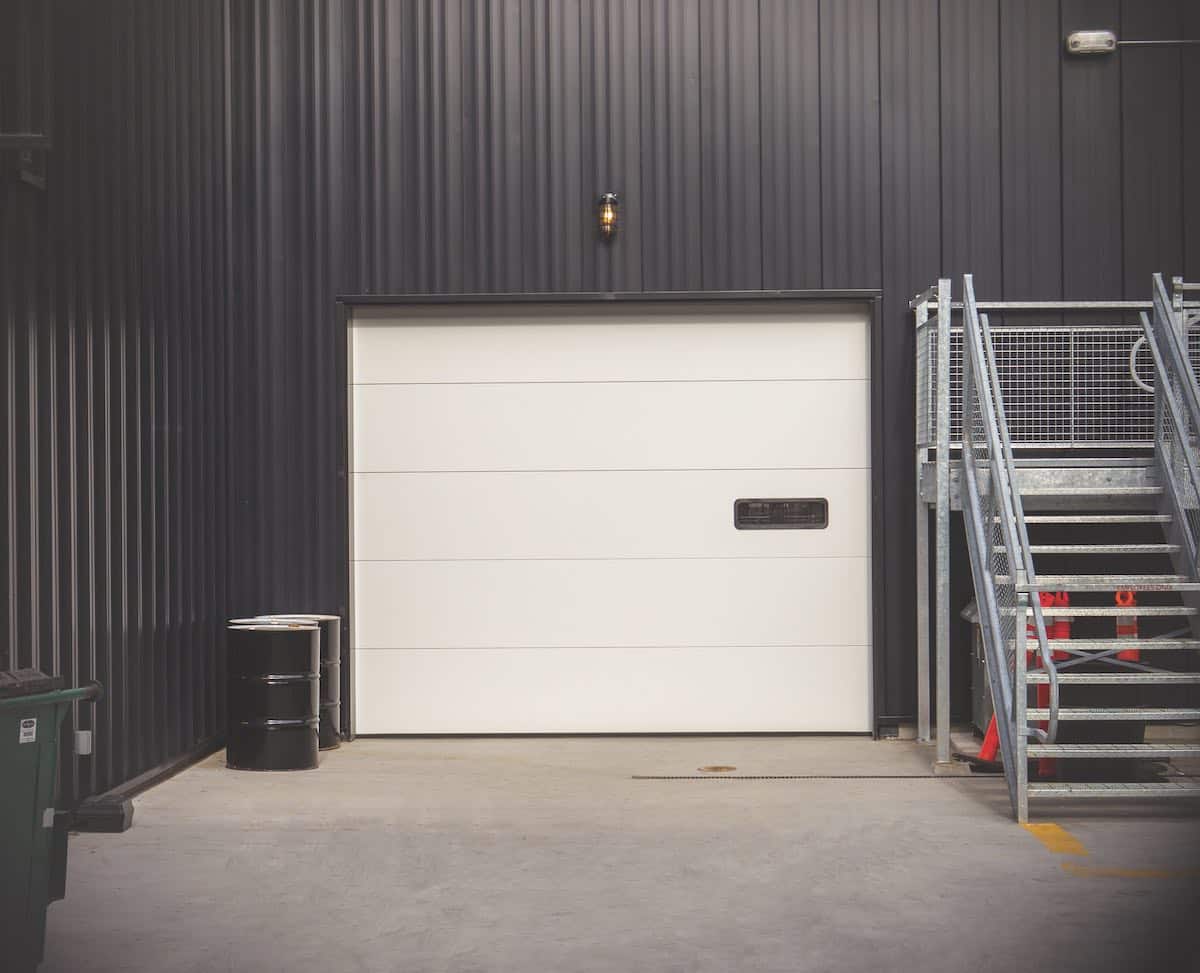
- Sectional doors are made of panel sections connected with hinges that open vertically, sliding up along tracks. They are a good fit for warehouses and industrial buildings.
- Roll-up doors coil into a drum above the opening, which saves space. Storage facilities and service stations use them.
- Sliding doors move horizontally and work well on wide openings, especially in industrial buildings with little headroom.
- Fire-rated doors are built to withstand high temperatures, and businesses with fire risk, like factories and commercial kitchens, need them.
What is the average cost of a standard commercial garage door?
A standard commercial garage door costs $800 to $5,000 on average, depending on size, material and options. Here is a quick breakdown:
| Door type | Average price |
|---|---|
| Basic roll-up door | $800 to $2,500 |
| Sectional steel door | $1,000 to $3,000 |
| Insulated door | $1,500 to $4,000 |
| Fire-rated door | $2,000 to $5,000 |
Installation can add another $500 to $1,200 to the total cost.
Which material options suit a commercial garage door?
Steel, aluminum, fiberglass and wood are the four material options for a commercial garage door.
- Steel is the most common choice for commercial garage doors because of its strength. It resists dents and can be insulated for better energy efficiency.
- Aluminum is lightweight and rust-resistant, so it suits businesses in coastal or humid areas.
- Fiberglass is lightweight and resists corrosion, though it may not hold up to impacts as well as steel.
- Wood is less common on commercial buildings, but a storefront, brewery or restaurant may choose it for curb appeal.
Is an insulated commercial door worth it for energy efficiency?
An insulated commercial door is worth it if your business runs heating or air conditioning in the space behind the door,. Insulated doors help hold indoor temperatures. Compare doors by R-value, a measure of insulation effectiveness: the higher the number, the better the door insulates. For an unheated storage bay or a door that stays open most of the day, a non-insulated door costs less and loses little.
What standard commercial garage door sizes are available?
Standard commercial garage doors are available in common stock sizes from 10 feet wide by 8 feet high to 16 feet wide by 10 feet high:
- 10 feet wide by 8 feet high
- 12 feet wide by 8 feet high
- 14 feet wide by 8 feet high
- 16 feet wide by 8 feet high
- 10 feet wide by 10 feet high
- 12 feet wide by 10 feet high
- 14 feet wide by 10 feet high
- 16 feet wide by 10 feet high
Commercial doors are generally larger than residential ones because they serve bigger vehicles and equipment, and larger commercial doors are built from 12 to 32 feet wide and 12 to 24 feet high. If you have unique size requirements, custom doors can be made to fit your opening.
How do you keep a commercial door durable with maintenance?
You keep a commercial garage door durable by choosing steel or aluminum and following a maintenance routine. Springs wear out first on a busy door: Clopay rates its standard commercial torsion springs at 10,000 cycles, with upgrades to 25,000, 50,000 or 100,000 cycles, so a door that cycles 20 times a day can wear through standard springs in under two years. To keep your door in top shape:
- Regularly lubricate moving parts.
- Inspect tracks and hinges for wear.
- Check the balance of the door to prevent strain on the motor.
- Schedule professional maintenance at least once a year.
Fire-rated doors have a legal schedule on top of this. DASMA notes that NFPA 80 and the International Fire Code require rolling steel fire doors to be inspected and tested annually by a trained technician.
How can you reduce the noise level of a commercial door?
You can reduce the noise level of a commercial garage door with nylon rollers and insulated panels. Newer motors and openers also run quieter than older models. To get a free estimate on a commercial door, call RJ Garage Door Service at (919) 438-7447.

