Key takeaways
- Garage door opener sensors (photo eyes) are a pair of safety devices on each side of the door that send an invisible infrared beam across the opening and make a closing door reverse if anything breaks the beam.
- Photo eyes must not be installed higher than six inches above the garage floor, according to DASMA’s Door & Access Systems magazine.
- Federal law has required external entrapment protection such as photo eyes on garage door openers since 1993, according to the Consumer Product Safety Commission.
- The most common sensor problem is misalignment, and most sensors have an LED that turns solid green when the two units line up.
- Cleaning the lenses, clearing obstructions, checking the wiring and unplugging the opener for 30 seconds fix many sensor problems without a service call.
Garage door opener sensors are the safety system that stops a closing garage door from coming down on a person, pet or car. Most homeowners use their opener for years without thinking about the sensors, until the door refuses to close or starts reversing for no clear reason. RJ Garage Door Service repairs garage door sensors across Raleigh and the Triangle, and most sensor problems have a simple cause you can check yourself.
What are garage door opener sensors?
Garage door opener sensors are safety devices that detect objects or obstructions in the door’s path and keep the door from closing on something, or someone, in the way. Most modern garage door openers use two kinds of sensors:
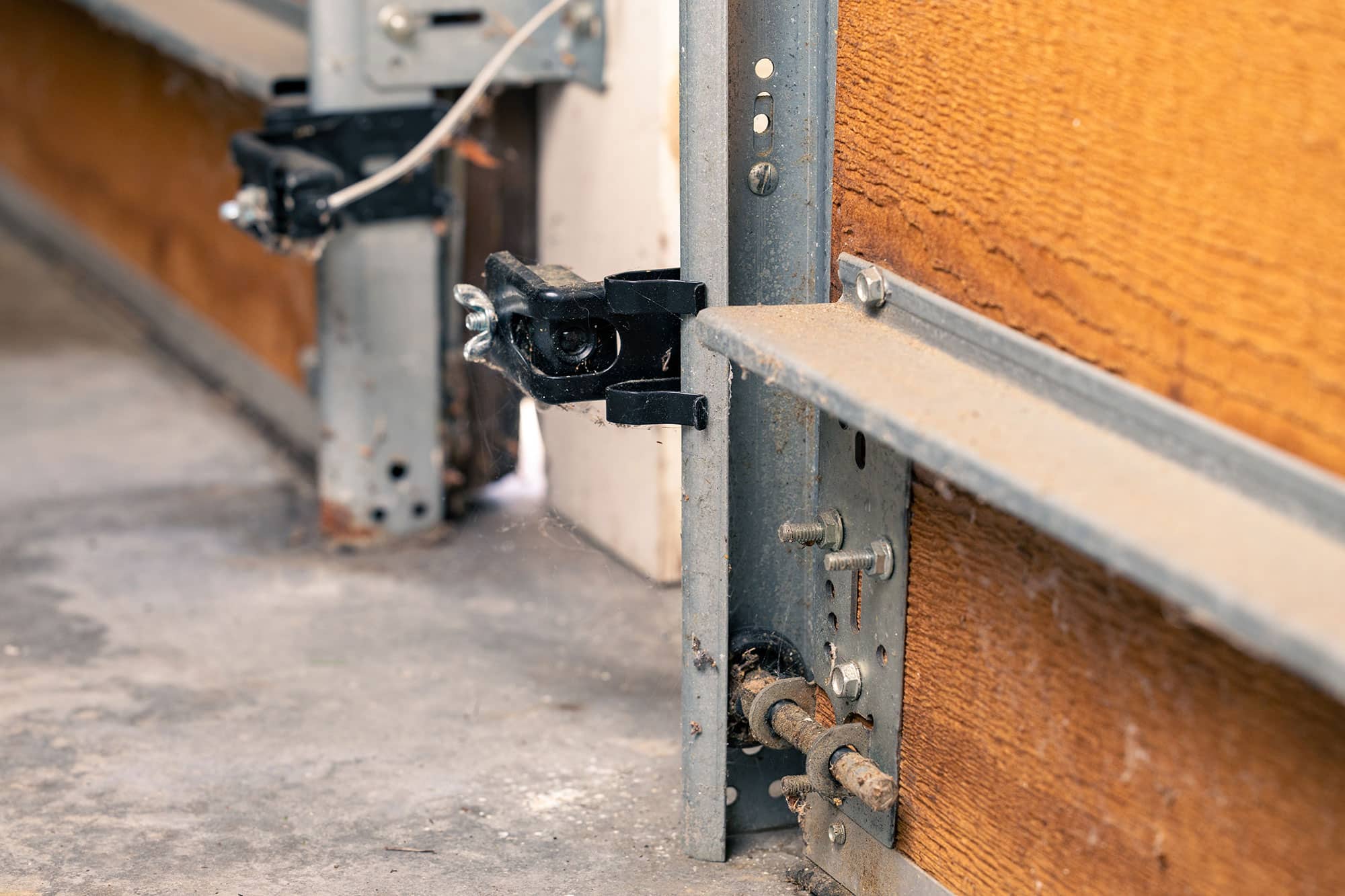
- Safety reversal sensors, also called photo eyes, mount on opposite sides of the door near the floor; DASMA notes they must not be installed higher than six inches above the garage floor. One sends an invisible infrared beam to the other, and if something interrupts the beam, the sensors signal the opener to reverse the door.
- Motion sensors are built into many modern openers and wall controls. On most models they turn on the opener’s lights when they detect movement in the garage; opening the door as your car approaches is usually handled by a smartphone app rather than a motion sensor.
Why are garage door opener sensors so important?
Garage door opener sensors are important because they prevent injuries, they are required by federal rules, and they let the door handle an obstruction on its own.
- Preventing accidents is the main job of the sensors. Without them, a closing door could injure a person or pet, or damage your car or other property.
- Sensors are a legal requirement on newer openers. The Consumer Product Safety Commission has required reversing systems on garage door openers made or imported for sale in the United States since January 1, 1991, and added a requirement for external entrapment protection, the role photo eyes fill, in 1993. The federal rule is built on UL 325, the U.S. safety standard for door operators.
- Sensors also add convenience, because the door reacts to an obstruction without you having to stop it by hand.
How do garage door sensors work?
Garage door sensors work by sending a beam of infrared light across the door opening and reversing the door when that beam is broken. The process runs in four steps:
- The two photo eyes on either side of the garage door face each other and create an invisible beam between them.
- One sensor sends an infrared light signal and the other receives it. That continuous beam acts as a safety line.
- If a person, pet or object crosses the beam while the door is closing, the signal is broken, which tells the opener something is in the way.
- When the opener detects the obstruction, it tells the door to reverse direction and open again.
What are common issues with garage door opener sensors?
The common issues with garage door opener sensors are misalignment, dirty lenses, damaged wiring, obstructions and power problems. The sensors are built to be reliable, but these five problems come up often.
- Misalignment is the most common problem. When the sensors aren’t lined up, the beam is broken and the door won’t close. A bump from a car, a kid’s bike or a rake leaned against the wall is usually the cause, along with ordinary wear.
- Dirt, dust or spider webs on the lenses can block the infrared signal. A dirty sensor can’t “see” the beam, so the door won’t work properly. Spider webs show up in a lot of Raleigh garages by late summer.
- Damaged wiring between the sensors and the opener stops them from communicating, so the door may not respond when it should. Low-voltage sensor wire is easy to staple through, chew through or snag.
- Small objects or debris in front of a sensor can block the signal even when they aren’t obvious.
- If the opener or sensors aren’t getting power, they can stop working as expected.
How do you fix common sensor problems?
You can fix most common garage door sensor problems yourself by checking alignment, cleaning the lenses, clearing obstructions, checking the wiring, resetting the opener and testing the door. Work through these steps in order:
- Check the alignment.
- Make sure the sensors on either side of the door face each other directly and aren’t tilted.
- Most sensors have a small LED that turns green when they’re aligned. If one light is red or blinking, adjust that sensor until the light is solid green.
- Clean the sensors.
- Gently wipe the lenses with a soft cloth to remove dust, dirt or spider webs. Don’t use harsh chemicals or abrasive materials, which can scratch the lenses.
- Look for obstructions.
- Check for objects, debris or leaves in front of the sensors. Even something small can make the door misbehave.
- Check the wiring.
- Look over the wires running to the sensors for damage. If you see fraying or cuts, the wiring may need to be repaired or replaced.
- Reset the opener.
- A simple reset sometimes clears sensor problems. Unplug the garage door opener, wait 30 seconds and plug it back in.
- Test the sensors.
- After any adjustment, test the door. Hold an object such as a broomstick in the door’s path while it closes; the door should reverse when it detects the obstruction.
- The International Door Association’s care and maintenance guide also recommends a monthly reversal test: lay a piece of wood on the floor in the door’s path, and the door should reverse when it strikes the wood.
When should you call a professional?
You should call a professional when you’ve worked through the troubleshooting steps and the garage door still isn’t working. A technician can diagnose harder problems such as faulty wiring, a failed sensor or trouble with the opener’s motor, and can inspect and maintain the whole garage door system so it runs safely. If the door fails the reversal test, stop using the automatic opener until it’s fixed. One thing not to try: taping the sensors together or bypassing them to get the door to close, which removes the protection the federal rules require. For sensor repair in Raleigh, Durham, Cary or the Triangle, call RJ Garage Door Service at (919) 438-7447.