
Topics Covered:
Key takeaways
- A two-to-one garage door conversion removes the post between two single-car openings, usually about 8 to 9 feet wide each, and replaces them with one opening near 16 to 18 feet wide.
- If the center post is load-bearing, it has to be replaced with a beam or header sized for the wider span before the new door goes in.
- In Raleigh, structural changes like removing a center post require a building permit and inspection.
- The 2025 Remodeling Cost vs. Value Report ranked garage door replacement first of 28 projects, with an estimated resale value of $12,507 against an average cost of $4,672.
- Most two-to-one conversions RJ Garage Door Service handles are finished within one to two weeks, depending on weather, permit processing and project complexity.
A two-to-one garage door conversion replaces two narrow garage doors with one wide door by removing the center post, reinforcing the opening with a new header and installing a 16- to 18-foot door. Homeowners usually do it for easier parking, a cleaner front elevation and more room inside. If you’re tired of lining your car up with the right door every time you pull in, you’re not alone. RJ Garage Door Service handles these conversions for homeowners in Raleigh, Durham, Cary and the rest of the Triangle, and this guide covers how to tell whether the project fits your house and what to expect if you go ahead.
Why convert from two garage doors to one?
Converting from two garage doors to one gives you a more unified look, easier parking, a little more usable space and better curb appeal. If you have a two-door setup now, you might be wondering what the advantage is. These are the reasons our Raleigh-area clients give most often:
- A single large garage door gives the house a more unified, streamlined front. If you like a modern or minimalist style, merging the doors fits that design.
- Parking gets easier because you no longer have to line up with one specific door. A wide opening gives you more room for error, which helps if you drive a full-size truck or SUV.
- Removing or relocating the center post can free up some interior space for shelves and racks, or just make it easier to move around inside the garage.
- Curb appeal and resale value improve. Garage door replacement ranked first of 28 projects in the 2025 Remodeling Cost vs. Value Report from Zonda Media, with a national average cost of $4,672 and an estimated resale value of $12,507 (DASMA summary of the Cost vs. Value Report, Winter 2025). That figure is for replacing a door in an existing opening. A conversion adds structural costs, so its return will be smaller.
Whether one big door is right for you depends on your garage’s structure and your daily routine. If you park one car and use the other bay as a workshop, two doors may actually suit you better, since you can open one side without exposing the other.
How do you evaluate your garage’s structure for a conversion?
You evaluate your garage’s structure for a two-to-one conversion by answering two questions: is the center post load-bearing, and how wide will the new opening be? Confirm the garage can handle the change before you plan anything else:
- Is the center post load-bearing? In many two-door garages, a post or pillar separates the openings. Sometimes the post is only decorative; other times it carries the weight of the roof or a room above the garage. If it’s structural, you need a professional to assess it and, in most cases, install a beam before the post comes out.
- How large is the opening? Standard two-door garages usually have openings around 8 to 9 feet wide each. Merged, the opening ends up near 16 to 18 feet wide. That’s a long span, so the framing around it, including the header, has to be strong enough to carry the load above.
A structural engineer or an experienced garage door technician can tell you what’s feasible. Don’t skip this step: finding a structural weakness halfway through causes delays and can create a safety hazard.
How much should you budget for a two-to-one conversion project?
A two-to-one conversion usually costs more than a standard garage door replacement, because you’re paying for structural work as well as a new door. Costs depend on region, door materials and labor rates, and four areas make up most of the budget:
- Demolition and structural reinforcement, meaning removing the center post (if needed) and reinforcing the opening, can take up a large share of the budget.
- One large door generally costs more than a standard single-car door, especially with high-end materials or extra insulation, and the wider, heavier door may need a stronger opener.
- Finishing work adds up if you repaint or re-side the front of the garage or want interior finishes. Some homeowners also upgrade lighting or electrical while the space is open.
- In Raleigh, as in most cities, structural changes require a building permit. The permit fee itself usually isn’t large, but budget time and money for the inspections too.
The best approach is to get several quotes from reputable contractors. Ask for itemized estimates so you can compare apples to apples and see which proposal suits you. RJ Garage Door Service also recommends setting aside 10-20% of your total budget as a contingency for surprises such as rotten framing.
How do you plan your garage’s new look?
You plan your garage’s new look by choosing a door style, an insulation level, windows and hardware, and smart features that fit how you use the space. Design affects function as much as curb appeal. When going from two doors to one, think about:
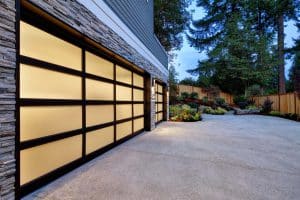
- Door style. Choices run from traditional carriage-house panels to sleek full-view glass doors. Pick one that suits your home’s architecture, and consider matching the trim and color of your front entry to tie the exterior together.
- Insulation. An insulated garage door helps regulate the temperature inside, which is especially useful if the garage is attached to your living space or you use it for hobbies or a workshop. Compare R-values if energy efficiency is a priority; Clopay, for example, lists R-values up to 18.4 for most of its 2-inch Intellicore doors (Clopay).
- Windows and hardware. Decorative windows or distinctive hardware add character, and windows bring natural light into the garage. Place them high enough to protect privacy and security.
- Smart features. Many new doors pair with smart openers that connect to a phone app, so you can open or check the door from anywhere. Some also work with home security systems or voice assistants like Amazon Alexa.
You’ll live with this setup for years, so take time to picture what you want. Online galleries, local showrooms and a design consultation can all give you ideas you hadn’t considered.
What happens during the construction and installation process?
The construction and installation process for a two-to-one conversion runs through six stages, from the first assessment to the final walkthrough. The construction phase can feel like the most intimidating part, but here’s what to expect when you hire a professional team like ours at RJ Garage Door Service:
- We visit your home, take measurements and talk through your preferences. If a structural post needs to come out, we may coordinate with an engineer or contractor to confirm what’s required.
- Once you’ve settled on a design, we help you get the necessary permits and schedule a date that works for you. Before that day, clear out anything stored near the garage entrance so the crew has room to work.
- We remove the existing doors, tracks and hardware. If the project involves taking out the center post, we do that and install a sturdy beam or header to keep the structure sound.
- We frame the new, wider opening and check that it’s square, level and up to code. Good framing is what lets a 16-foot door run smoothly for years.
- With the opening ready, we install the new door’s track, torsion springs (or extension springs, if you prefer) and opener, then run several test cycles to confirm everything moves smoothly and safely.
- Finally, we seal around the door, paint or stain any new wood framing and make sure the new door looks like it was always there. We also go over basic maintenance so you can keep the door in good shape.
The exact timeline depends on weather, permit processing times and how complex your project is, but most two-to-one conversions are finished within a week or two.
What safety and compliance considerations apply to a garage door conversion?
The safety and compliance considerations for a garage door conversion are building codes, working safety sensors, correct spring tension and your insurance requirements. A garage door is the largest moving object in most homes, so don’t cut corners, especially when you’re changing structural elements:
- Check the City of Raleigh’s building code requirements (or your town’s) so the work meets or exceeds code. That can cover the size and placement of new support beams and the type of opener you install.
- Every modern door opener needs safety sensors that detect objects or people in the path of a closing door. Under CPSC rules, residential openers made on or after January 1, 1993 must have an external entrapment protection device such as an electric eye or door edge sensor (CPSC, December 1992). Your installer will test them before handing the door over.
- A larger door usually needs heavier-duty springs. Incorrect tension causes jerky movement and can lead to door failure over time, so a professional should set the balance.
- Some insurance policies require that major structural changes, like removing a center post, be done by licensed contractors. Ask your insurer before work starts, because that requirement protects you if there’s damage or an accident later.
What real-life impact does a two-to-one conversion have?
The real-life impact of a two-to-one conversion is mostly easier daily use and a better first impression, with a possible lift in resale value. Not sure if a conversion is really worth it? Consider these points:
- National remodeling studies consistently place garage door replacement near the top for return on investment; in the 2025 Cost vs. Value Report it ranked first. A conversion costs more than a straight replacement, so expect a smaller percentage return, though the change in how the house looks is bigger.
- One door has fewer edges and seals than two, so a single insulated door can cut down on drafts. Some homeowners with attached garages report lower energy bills afterward.
- In competitive real estate markets, a modern, convenient garage can help a home attract buyers.
Many local clients tell us the single door makes everyday life simpler: no more juggling remotes for each car, easier entry for larger vehicles and a neater look from the street.
Why choose RJ Garage Door Service for your conversion?
RJ Garage Door Service is a Raleigh-based garage door company that has handled residential and commercial installations across the Triangle since 2013, and we manage a conversion from consultation to final inspection. With so many steps involved, you might be wondering where to start. Here’s what we bring:
- We’re based at 4200 Atlantic Ave in Raleigh, so we know the local building codes, the weather and the architectural styles that shape your project.
- We take a full-service approach and stay involved from the first consultation to the final inspection.
- We aim to do the job right the first time, using quality materials and proven methods.
- Our pricing is transparent, with no hidden fees or confusing upsells. We walk you through the costs so you can budget with confidence.
- Need a tune-up or run into a problem months later? We’re a phone call away.
A conversion is a big project, and we want you to feel good about it rather than stressed. If you’re thinking about turning your two-door setup into one wide entry, call RJ Garage Door Service at (919) 438-7447 for a free estimate. We’ll answer your questions, go over your options and tell you honestly whether the conversion makes sense for your garage.