Topics Covered:
When your commercial overhead door stops working, every minute counts. A malfunctioning door can halt deliveries, compromise security, and disrupt your entire operation. At RJ Garage Door Services, we specialize in commercial overhead door repair that gets your business back on track quickly. This guide covers everything you need to know about identifying problems, understanding repair costs, and finding the right overhead door repair service for your facility.
What Is a Commercial Overhead Door and How Does It Work?
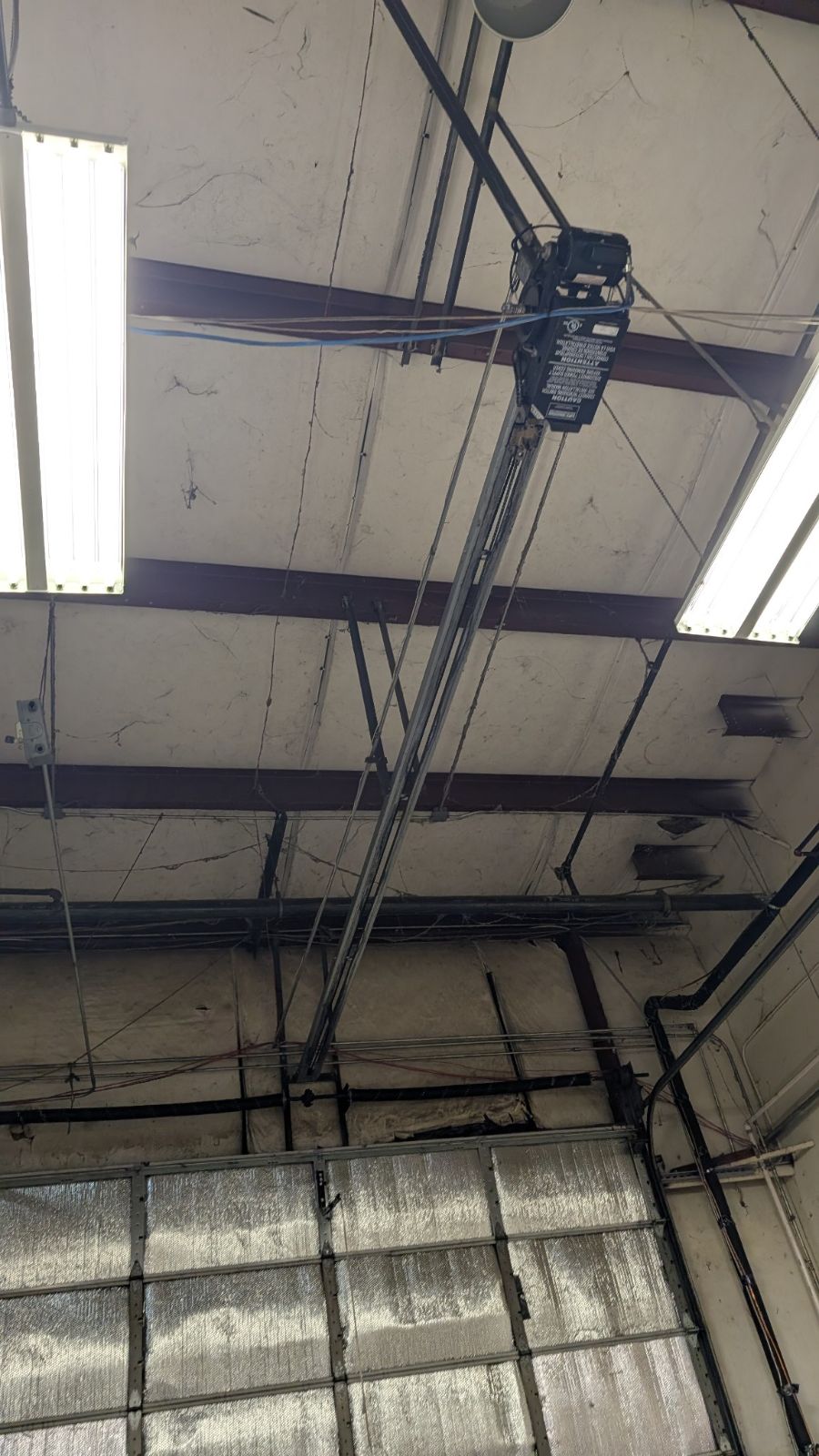
A commercial overhead door is a large door system designed for warehouses, distribution centers, retail storefronts, fire stations, and manufacturing facilities. These doors operate by rolling or lifting vertically, then storing horizontally along the ceiling or coiling into a drum above the opening. This design maximizes floor space and allows wide vehicle or equipment access.
Commercial overhead doors differ from residential garage doors in their size, weight, and durability requirements. Industrial facilities often run these doors dozens or even hundreds of times daily, demanding components built for heavy-duty cycles. The mechanical system includes springs, cables, tracks, rollers, and either manual or motorized operation.
Primary components of a commercial overhead door system:
- Torsion or Extension Springs: These counterbalance the door’s weight, making it possible to lift doors weighing several hundred pounds with minimal force. Commercial doors typically use high-cycle torsion springs rated for 50,000 to 100,000 cycles.
- Steel Cables: Aircraft-grade cables connect the springs to the door, transferring lifting force safely. Frayed or broken cables pose serious safety risks and require immediate attention.
- Track System: Vertical and horizontal tracks guide the door’s movement. Misaligned tracks cause binding, uneven wear, and premature component failure.
- Rollers and Hinges: These enable smooth movement along the tracks. Commercial doors use heavy-duty steel or nylon rollers designed for thousands of cycles.
- Opener Motor: Electric operators power automatic doors, with commercial units ranging from 1/2 HP for lighter doors to 3 HP or more for large industrial applications.
Comparison of Commercial Overhead Door Types
| Door Type | Best Applications | Average Lifespan | Typical Repair Frequency |
|---|---|---|---|
| Sectional Steel | Warehouses, retail | 20-30 years | Every 3-5 years |
| Rolling Steel | High-security facilities | 25-35 years | Every 2-4 years |
| High-Speed Fabric | Cold storage, cleanrooms | 10-15 years | Annual service |
| Fire-Rated | Code-required openings | 20-25 years | Annual inspection required |
| Insulated Sectional | Climate-controlled spaces | 20-30 years | Every 3-5 years |
What Are the Most Common Signs Your Commercial Door Needs Repair?
Recognizing early warning signs prevents minor issues from becoming major failures. Commercial doors often show subtle symptoms before breaking down completely. Training your staff to identify these indicators saves money and prevents unexpected downtime.
Visual inspections should become part of your regular facility maintenance routine. Look for physical damage, worn components, and changes in door operation. Listening for unusual sounds during operation also reveals developing problems that visual inspection might miss.
“We tell our commercial clients that prevention costs pennies compared to emergency repairs. A door that starts making grinding noises today might fail completely next week. Acting on early warning signs keeps operations running and repair costs manageable.” – Strategy Team, RJ Garage Door Services
Warning signs that indicate your commercial overhead door needs professional attention:
- Unusual Noises During Operation: Grinding, scraping, popping, or squealing sounds indicate worn rollers, dry bearings, loose hardware, or track misalignment. These noises grow worse over time and signal components approaching failure.
- Slow or Uneven Movement: A door that hesitates, jerks, or moves at inconsistent speeds may have spring tension issues, motor problems, or track obstructions. This symptom often precedes complete failure.
- Visible Cable Fraying or Damage: Inspect cables regularly for broken strands, kinks, or rust. Damaged cables can snap suddenly, creating dangerous conditions and potentially damaging the door or nearby equipment.
- Door Won’t Stay Open or Closed: This typically indicates spring failure or balance problems. A door that drifts down when left open has lost spring tension and puts strain on the opener motor.
- Gaps Along the Bottom or Sides: Uneven gaps allow weather, pests, and unauthorized access into your facility. They indicate track issues, worn weatherstripping, or structural settling.
- Difficulty Operating Manually: During power outages, you should be able to lift the door with reasonable effort. A door that feels extremely heavy has spring problems requiring immediate repair.
Symptom Severity and Recommended Response Time
| Symptom | Severity Level | Recommended Action | Risk if Ignored |
|---|---|---|---|
| Door won’t open at all | Critical | Same-day service | Business interruption |
| Visible cable damage | High | Within 24 hours | Safety hazard, sudden failure |
| Grinding or scraping noises | Medium | Within 1 week | Component damage, higher repair costs |
| Minor gaps or drafts | Low | Schedule during maintenance | Energy loss, pest entry |
| Slow operation speed | Medium | Within 1-2 weeks | Motor burnout, spring failure |
Why Won’t My Commercial Overhead Door Open or Close Properly?
When your commercial overhead door refuses to operate correctly, several factors could be responsible. Diagnosing the root cause requires understanding how each component affects door operation. Some issues have simple fixes, while others demand professional industrial overhead door repair to prevent further damage.
Power-related problems account for many service calls. Before assuming mechanical failure, verify that the door has power and that the disconnect switch hasn’t been activated. Check your circuit breakers and inspect the power cord for damage. Many businesses overlook these basic steps and pay for service calls that identify simple electrical issues.
Common causes of commercial overhead door operation failures:
- Broken Torsion Springs: Springs support the door’s weight, and when they break, the door becomes too heavy for the opener to lift. You might hear a loud bang when a spring breaks, as the stored tension releases suddenly. Garage door spring repair should only be performed by trained technicians due to the high forces involved.
- Damaged or Off-Track Rollers: Rollers can wear down, crack, or jump out of the track. When this happens, the door binds or refuses to move. Garage door roller replacement restores smooth operation and prevents track damage.
- Track Misalignment: Impacts from forklifts, delivery trucks, or settling buildings can bend or shift tracks out of position. Track alignment and repair addresses these issues before they cause roller or door damage.
- Snapped Lift Cables: Cable repair becomes necessary when cables fray, rust, or snap. Without functional cables, springs cannot lift the door, and operation becomes impossible.
- Safety Sensor Issues: Modern commercial doors include photo-eye sensors that prevent the door from closing on people or objects. Dirty lenses, misalignment, or damaged wiring triggers safety stops. Safety sensor repair restores normal operation while maintaining protection.
- Opener Motor Failure: Motors wear out over time, especially in high-cycle commercial applications. Signs include humming without movement, intermittent operation, or complete failure. Garage opener repair can often restore function, though severely worn motors may require replacement.
How Much Does Commercial Overhead Door Repair Cost?
Repair costs for commercial overhead doors vary based on the type of repair, door size, urgency, and your location. Understanding typical price ranges helps you budget appropriately and recognize fair quotes from commercial door repair companies. While exact prices depend on your specific situation, we can provide general guidance on what to expect.
Emergency and after-hours services typically cost 1.5 to 2 times standard rates. Planning repairs during regular business hours whenever possible reduces costs significantly. Some repairs that seem urgent can safely wait until normal service hours if you can secure the door manually.
“Transparent pricing builds trust with our commercial clients. We provide detailed estimates before starting work because businesses need to know their costs upfront. No surprise charges, no hidden fees. You approve the work before we begin.” – Strategy Team, RJ Garage Door Services
Typical Commercial Overhead Door Repair Cost Ranges
| Repair Type | Low Estimate | High Estimate | Factors Affecting Price |
|---|---|---|---|
| Spring Replacement | $200 | $600 | Spring type, door size, cycle rating |
| Cable Repair | $150 | $400 | Cable length, accessibility |
| Roller Replacement (set) | $150 | $350 | Roller type, quantity needed |
| Track Realignment | $125 | $350 | Damage severity, track length |
| Opener Motor Repair | $150 | $500 | Motor type, parts needed |
| Panel Replacement | $250 | $800+ | Panel size, material, insulation |
| Complete Opener Replacement | $800 | $2,500+ | HP rating, features, installation complexity |
Factors that influence your total repair cost:
- Door Size and Weight: Larger, heavier doors require stronger components that cost more. A 20-foot-wide warehouse door needs beefier springs and a more powerful motor than a 10-foot retail entrance.
- Component Quality: Standard-duty parts cost less but may need replacement sooner. High-cycle commercial components carry premium prices but provide longer service life and better value for busy facilities.
- Labor Accessibility: Doors in tight spaces, at unusual heights, or requiring special equipment to access take longer to repair. Clear, accessible doors reduce labor time and costs.
- Service Urgency: Same-day commercial overhead door repair and emergency service commands higher rates than scheduled appointments. When possible, plan repairs in advance to reduce costs.
- Geographic Location: Labor rates and parts availability vary by region. Urban areas with many technicians often have competitive pricing, while remote locations may incur travel charges.
Should You Repair or Replace Your Commercial Overhead Door?
Deciding between repair and replacement requires weighing several factors. Sometimes repairing an aging door makes financial sense, while other situations call for complete replacement. Making the right choice prevents wasting money on a door that should be retired or replacing one that could serve for many more years.
Age alone doesn’t determine whether to repair or replace. A well-maintained 20-year-old door in good structural condition may deserve repair, while a 10-year-old door with chronic problems might be a better replacement candidate. Consider the door’s history, your facility’s needs, and future plans when making this decision.
Questions to help determine whether repair or replacement makes sense:
- What Is the Door’s Overall Condition? If the door panels remain straight, the frame is solid, and only specific components have failed, repair usually makes sense. Widespread rust, multiple bent panels, or structural damage points toward replacement.
- How Often Have You Needed Repairs? A door requiring frequent service has reached the point where replacement costs less than continued repairs. When annual repair costs approach 50% of replacement cost, consider installing new.
- Does the Door Meet Current Needs? Your business may have changed since the door was installed. If you need better insulation, faster operation, or different security features, replacement provides an opportunity to upgrade.
- Are Replacement Parts Available? Discontinued models present challenges when specific parts fail. If sourcing parts becomes difficult or expensive, replacement with a current model simplifies future maintenance.
- What Are Your Energy Costs? Older non-insulated doors waste heating and cooling energy. Garage door insulation can improve existing doors, but heavily damaged or inefficient doors may benefit more from replacement with factory-insulated units.
Repair vs. Replace Decision Guide
| Scenario | Recommendation | Reasoning |
|---|---|---|
| Single component failure, door under 15 years | Repair | Most cost-effective, extends service life |
| Multiple component failures, door over 20 years | Replace | Cumulative repair costs exceed value |
| Structural damage from impact | Replace | Repairs may not restore integrity |
| Door works but lacks needed features | Replace | Upgrade to meet current requirements |
| Parts discontinued, alternatives available | Repair with alternatives | Cost-effective if alternatives fit |
| Parts discontinued, no alternatives | Replace | Future repairs will be impossible |
What Should You Expect From Emergency Commercial Door Repair Service?
When your commercial overhead door fails unexpectedly, emergency service gets your business moving again. Understanding what to expect from same-day commercial overhead door repair helps you choose the right provider and prepare for their arrival. A true emergency service operates differently from scheduled maintenance.
Legitimate commercial door repair companies offering emergency service maintain technicians on call outside regular hours. They stock common parts in service vehicles to complete most repairs in a single visit. Response times vary by location and demand, but reputable companies provide honest estimates when you call.
“Emergency calls stress everyone out. Our goal is to reduce that stress by responding quickly, communicating clearly, and fixing the problem right the first time. We understand that a broken door costs your business money every hour it stays down.” – Strategy Team, RJ Garage Door Services
What a professional emergency repair visit should include:
- Quick Response Time: Quality providers arrive within 1-4 hours for true emergencies. They provide realistic arrival windows rather than vague promises, and they call if delays occur.
- On-Site Diagnosis: The technician examines your door, identifies the problem, and explains the issue in terms you understand. They should show you what failed and why.
- Upfront Pricing: Before starting work, you receive a clear estimate covering parts and labor. Emergency rates should be disclosed, and you approve costs before repairs begin.
- Quality Parts: Professional services use commercial-grade replacement parts, not residential alternatives that fail prematurely under heavy use.
- Safety Verification: After repair, the technician tests all safety features, including auto-reverse mechanisms and photo-eye sensors, to verify proper function.
- Documentation: You receive written documentation of the repair, including parts installed, work performed, and any warranty information.
How Can Preventative Maintenance Reduce Commercial Door Repair Costs?
Scheduled maintenance extends door life and reduces unexpected failures. Preventative maintenance plans catch developing problems before they cause downtime, keeping repair costs manageable and operations running smoothly. Most commercial door manufacturers recommend professional maintenance at least annually, with quarterly service for high-use doors.
Regular garage door maintenance includes lubrication, hardware tightening, balance testing, and component inspection. These services take relatively little time but provide significant benefits. Well-maintained doors operate more quietly, move more smoothly, and last years longer than neglected ones.
What professional maintenance service includes:
- Complete Visual Inspection: Technicians examine all components for wear, damage, or developing problems. This includes springs, cables, tracks, rollers, hinges, panels, and weatherstripping.
- Lubrication: Proper lubrication reduces friction, quiets operation, and prevents premature wear. Technicians apply the right lubricants to appropriate components while avoiding areas that should remain dry.
- Hardware Tightening: Vibration loosens bolts, screws, and brackets over time. Maintenance visits include checking and tightening all hardware to prevent parts from falling or causing misalignment.
- Balance Testing: A properly balanced door puts minimal strain on the opener and operates smoothly. Commercial door balance adjustment corrects doors that have become too heavy or too light.
- Safety System Testing: Technicians verify that auto-reverse features and photo-eye sensors function correctly, meeting safety inspection and compliance requirements.
- Weatherstripping Assessment: Seals wear out and need periodic replacement. Garage door weather seal replacement maintains energy efficiency and keeps out weather, pests, and debris.
Maintenance Frequency Recommendations by Door Usage
| Daily Cycles | Usage Level | Recommended Maintenance | Expected Benefit |
|---|---|---|---|
| Under 10 | Light | Annual | Extends life 5+ years |
| 10-25 | Moderate | Semi-annual | Reduces repairs 40% |
| 25-50 | Heavy | Quarterly | Reduces repairs 60% |
| Over 50 | Extreme | Monthly or bi-monthly | Prevents unexpected failures |
How Do You Choose the Right Commercial Overhead Door Repair Company?
Selecting a commercial door repair company affects repair quality, cost, and your long-term satisfaction. Not all service providers offer the same expertise, and choosing poorly can result in recurring problems, wasted money, or unsafe conditions. Taking time to evaluate your options pays off through better service and lasting repairs.
Commercial overhead doors require different skills than residential garage doors. A company specializing in commercial and industrial work understands the demands of high-cycle applications, safety regulations, and business needs. Look for experience with your specific door types and honest communication about capabilities.
“We earned our reputation by doing the job right, not by underbidding and cutting corners. When you hire us, you get technicians who’ve worked on hundreds of commercial doors and can handle whatever problems they find. That experience shows in repair quality and longevity.” – Strategy Team, RJ Garage Door Services
Criteria for evaluating commercial door repair companies:
- Commercial Experience: Ask how long they’ve served commercial clients and what types of doors they work on regularly. Specialists understand commercial requirements better than generalists who primarily serve residential customers.
- Licensing and Insurance: Verify that the company holds appropriate licenses for your area and carries liability insurance and workers’ compensation coverage. This protects you from liability if accidents occur on your property.
- Response Capabilities: Determine their typical response time and whether they offer emergency service. A company that can respond quickly when problems arise provides more value than one requiring week-long waits for appointments.
- Parts Quality: Ask about the parts they install. Commercial-grade components cost more but last longer and perform better than residential alternatives. Quality companies stand behind their parts with meaningful warranties.
- References and Reviews: Request references from commercial clients with similar doors. Online reviews provide additional perspective, though focus on patterns rather than individual complaints.
- Written Estimates: Professional companies provide written estimates before beginning work. Avoid companies that give vague pricing or refuse to commit to costs in writing.
What Other Commercial Door Services Might Your Facility Need?
Commercial facilities often have multiple door types requiring different services. Understanding available services helps you address all your facility’s needs through a single trusted provider. Working with one company that handles all your door requirements simplifies scheduling, billing, and maintenance coordination.
Many facilities benefit from upgrading or adding door systems beyond simple repairs. Growing businesses may need commercial garage door installation for new openings. Facilities with loading docks require specialized loading dock door repair and installation services. Understanding your options helps you plan improvements strategically.
Related commercial door services to consider:
- Rolling Steel Door Services: Rolling steel door repair addresses these durable, space-saving doors common in warehouses, storage facilities, and retail security applications. Rolling doors have unique components requiring specialized knowledge.
- Fire Door Compliance: Code-required fire doors need regular inspection and certification. Fire door repair services keep these critical safety systems functional and compliant with local regulations.
- Opener Installation: Upgrading manual doors to automatic operation improves efficiency and reduces worker strain. Garage door opener installation can transform how your facility operates.
- Hinge Repair: Worn or damaged hinges affect door alignment and panel integrity. Garage door hinge repair prevents cascading damage to other components.
- Panel Replacement: Damaged panels compromise security, insulation, and appearance. Garage door panel repair restores functionality without full door replacement when damage is localized.
- Door Conversion: Changing door styles or sizes to meet new requirements is possible through garage door conversion services that modify existing openings.
Conclusion
Commercial overhead doors keep your business secure and operations flowing smoothly. When problems arise, quick diagnosis and quality repairs minimize disruption and costs. Our team at RJ Garage Door Services brings years of commercial door experience to every job, providing the expertise your facility needs. We service all major commercial door types and maintain fully stocked trucks for first-visit repairs whenever possible.
If you need help with commercial overhead door repair or any other commercial door service, contact RJ Garage Door Services today. We offer same-day emergency service and free estimates for all commercial clients.
Frequently Asked Questions
How quickly can a commercial overhead door repair company respond to emergencies?
Most reputable commercial door repair companies respond to true emergencies within one to four hours during business hours. After-hours emergency service availability varies by provider. When calling, ask for an honest arrival estimate and confirm emergency service rates before scheduling.
Can I operate my commercial overhead door manually if the opener fails?
Most commercial doors include manual release mechanisms allowing operation during power outages or opener failures. Locate the release, typically a red cord or lever, and disengage the opener. The door should lift and lower by hand, though balanced doors require less effort than unbalanced ones.
How long do commercial overhead door repairs typically take?
Simple repairs like roller replacement or track adjustment take one to two hours. Spring replacement typically requires two to three hours. Complex repairs involving multiple components or custom parts may take longer or require a follow-up visit once parts arrive.
What causes commercial overhead door springs to break?
Springs have a finite cycle life, typically 10,000 to 100,000 cycles depending on quality. Normal wear from daily operation eventually causes fatigue and failure. Rust, improper installation, and extreme temperatures accelerate spring deterioration. High-cycle springs last longer in busy commercial applications.
Should I attempt any commercial overhead door repairs myself?
Minor tasks like lubrication and visual inspections are safe for facility staff. Spring replacement, cable work, and major repairs involve stored energy and heavy components that can cause serious injury. Professional technicians have the training, tools, and experience to complete these repairs safely.
How often should commercial overhead doors receive professional maintenance?
Annual maintenance suits light-use doors opening fewer than ten times daily. Moderate-use doors benefit from semi-annual service, while heavy-use doors operating over 25 cycles daily should receive quarterly professional attention. Following manufacturer recommendations protects warranties and extends service life.
What warranty should I expect on commercial door repairs?
Quality commercial door repair companies typically offer 90 days to one year on labor and pass through manufacturer warranties on parts. Spring warranties often cover a specific number of cycles rather than time. Request warranty details in writing before approving repairs.
Can damaged commercial overhead door panels be replaced individually?
Individual panel replacement is often possible when damage is limited to one or two sections. The availability of matching panels depends on the door’s age and manufacturer. Professional technicians can assess whether panel replacement or full door replacement makes better financial sense for your situation.