
Topics Covered:
Key takeaways
- An attached garage shares at least one wall with your home, so insulation, quiet operation and security against intruders who could reach the house come first; an R-value of 12 or higher makes a noticeable difference in Raleigh.
- A detached garage gets no heating or cooling from the house, so rust-resistant galvanized steel or fiberglass, motion-sensor lighting and reinforced locks matter more than top-tier insulation.
- Steel, wood, fiberglass, aluminum and vinyl all work on either garage type, but wood needs regular sealing or painting and is better suited to an attached garage unless you’re ready for frequent upkeep.
- Basic single-layer steel doors start around $600 to $800 plus installation, while high-end wood or fully insulated steel doors run $2,000 to $4,000 or more.
- A mid-range insulated steel door with good weatherstripping suits most Raleigh households, and a detached garage used only to park a car can often skip insulation entirely.
The right garage door for an attached garage is usually an insulated, quiet, secure door that matches the house, while the right door for a detached garage is usually a weather-resistant, well-locked door, with insulation only if you work or store temperature-sensitive things inside. RJ Garage Door Service installs both in Raleigh and across the Triangle. Both garage types store your vehicle and protect your belongings, but the way a garage connects (or doesn’t connect) to the main house changes what you should pay for. Below, we cover what to weigh for each setup, from materials and R-values to openers, security and budget.
Why does it matter whether a garage is detached or attached?
Whether a garage is detached or attached changes your top priority: a detached garage needs security and weather resistance, and an attached garage needs insulation and noise control. It’s easy to assume all garages are basically the same, but if yours is physically separate from your house, you may focus on security features that let you walk back and forth with confidence. If your garage shares walls with a living space, you’ll probably care more about insulation to keep your home comfortable and energy bills manageable.
That’s especially true in Raleigh. According to the National Weather Service’s 1991-2020 climate normals for Raleigh-Durham International Airport, the normal daily high peaks at 91 degrees F in July, and the normal low drops to 32 degrees F through January.
What should you consider for an attached garage door?
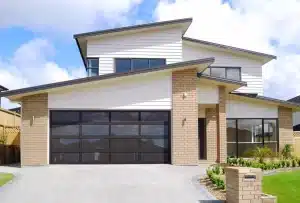
For an attached garage door, consider four things: insulation and energy efficiency, noise reduction, safety and security, and how the door looks with the rest of the house. An attached garage shares at least one wall with your home. You probably walk straight from your kitchen or mudroom into the garage, which makes day-to-day life convenient and also means whatever happens in the garage reaches the house.
1. How much insulation does an attached garage door need?
An attached garage door needs real insulation, ideally R-12 or higher in Raleigh, because the garage is effectively part of your home. Even though your garage isn’t as climate-controlled as your living room, a door that isn’t well insulated and sealed lets hot air in during summer and cold air in during winter, and that reaches the rooms next to the garage. Beyond the discomfort, it drives up your heating and cooling costs.
A garage door’s insulation rating is measured in R-value. The higher the R-value, the better the door resists heat transfer. For Raleigh homeowners, a door rated R-12 or higher makes a noticeable difference, especially if you open and close the door often during the day. For reference, Clopay lists R-values of 12.9 for its 1-3/8-inch insulated steel doors (Gallery, Modern Steel, Classic Steel and Bridgeport) and up to 18.4 for most of its 2-inch doors with Intellicore polyurethane foam. Good insulation goes hand in hand with tight weatherstripping around the edges to stop drafts.
2. How can you cut garage door noise in an attached garage?
You can cut garage door noise in an attached garage with an insulated door and a belt-drive opener. Attached garages share walls with your living space, so noise reduction is a big plus. If you’re tired of the opener rattling through your home at 6 a.m., an insulated door helps dampen the sound. Belt-drive openers also make less noise than chain-drive openers, which means less disturbance for anyone sleeping or watching TV next to the garage.
3. What safety and security features does an attached garage need?
An attached garage needs a sturdy, tamper-resistant door with reinforced locks and an opener with rolling code technology, because a break-in through the garage puts an intruder at your house door. Steel or composite construction and a reliable opener discourage break-ins.
Also check the door between your garage and home. It isn’t part of the garage door, but it is an important safety measure for attached setups: the International Residential Code (section R302.5.1) calls for that door to be solid wood or solid or honeycomb-core steel at least 1-3/8 inches thick, or a 20-minute fire-rated door.
4. Should an attached garage door match your home?
An attached garage door should usually match your home, because it often faces the street and has a large effect on curb appeal. A design that matches the architectural style and color palette of your house makes the whole front look finished. Whether you prefer a traditional carriage house style or a modern minimalist one, think about how the garage door will look against the front of the house.
A well-chosen door can also help resale value. In the 2025 Cost vs. Value Report from Zonda Media, as reported by DASMA, garage door replacement ranked first of 28 remodeling projects, with a national average cost of $4,672 and an estimated resale value of $12,507. Many buyers in Raleigh like a unified, attractive exterior.
What should you consider for a detached garage door?
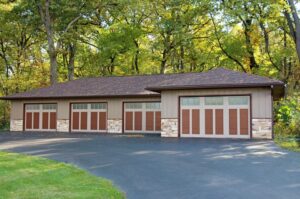
For a detached garage door, consider weather protection, security and lighting, how much freedom you want in style, and whether insulation is still worth it. A separate structure gives you more freedom in style but also brings its own problems, mostly exposure and distance from the house.
1. How do you protect a detached garage from Raleigh’s weather?
You protect a detached garage from Raleigh’s weather by choosing a door made of weather-resistant material, such as galvanized steel with a durable finish or fiberglass. Raleigh’s hot, humid summers and occasional cold winters hit a detached garage harder, because it gets no benefit from the house’s heating or cooling and is more exposed to the elements.
If you store expensive items (like lawn equipment or collectibles) in your detached garage, pick a door that resists rust and corrosion. Steel doors with a durable finish and fiberglass doors are good choices, because they’re less prone to moisture damage than wood, unless you’re prepared to seal and maintain a wooden door regularly.
2. How do you secure and light a detached garage?
You secure a detached garage with motion-sensor lighting, a door with reinforced construction, and clear sightlines around the building. A detached garage is physically separate from the main home, which can make it an easier target for intruders. To offset that:
- Install motion-sensor lights. Good lighting makes the garage less appealing to would-be burglars.
- Choose a door with reinforced construction, including reinforced panels, tamper-proof locks and sturdy tracks.
- Keep the area visible by trimming nearby bushes or trees that could give intruders cover.
If you have a long driveway or a secluded property, a smart garage door opener that alerts your phone when the door opens tells you right away if someone gets in without permission.
3. How much style freedom does a detached garage door give you?
A detached garage door gives you more style freedom than an attached one, because it doesn’t have to blend in with the house. It can be a bit of a “wild card” if you want. Some homeowners choose a contrasting style to make the garage stand out on the property; others prefer an exact match to keep everything consistent. Either approach works, and because the garage is separate, you can get more creative with color or design details.
4. Is insulation still worth considering for a detached garage?
Insulation is worth considering for a detached garage only if you use it as more than a parking spot. Some folks believe insulation isn’t necessary there, and if the garage is purely for car storage, a non-insulated or lightly insulated door is often fine. If you use the garage as a workshop or store temperature-sensitive items (like paint or electronics), insulation is still worth the money. In Raleigh, humidity creeps into just about any space, and keeping the garage interior cooler and drier makes a big difference in how well your belongings hold up.
Which garage door materials work for both garage types?
Steel, wood, fiberglass, aluminum and vinyl all work for both attached and detached garages, but each fits one setup better in Raleigh’s climate:
- Steel is popular, durable and relatively affordable. Galvanized steel resists rust, which makes it a good choice for detached garages exposed to heavy rain and humidity, and an insulated steel door is the energy-efficient pick for an attached garage.
- Wood is beautiful and traditional, but it needs regular sealing or painting to prevent moisture damage. It may suit an attached garage, where it’s somewhat protected, better than a detached structure, unless you’re ready for frequent upkeep.
- Fiberglass resists rust and is relatively low-maintenance. It can mimic the look of wood without the upkeep, which makes it a good fit for a detached garage when you want a stylish look without constant re-sealing.
- Aluminum is lightweight and corrosion-resistant but dents more easily. It works on both garage types, especially for a modern look, as long as the door isn’t somewhere it’s likely to get bumped or hit.
- Vinyl is very low-maintenance and usually dent-resistant, so it holds up to frequent use and families with kids. It works for both garage types, though insulation options differ by model.
Your choice comes down to budget, the look you want and how much of Raleigh’s seasonal weather the garage will take.
What are the common misconceptions about garage doors?
The three common misconceptions about garage doors are that a detached garage needs less security, that an attached garage always needs top-tier insulation, and that a bigger budget always buys better performance.
The first misconception is that “a detached garage doesn’t need the same level of security.” Even though it’s not connected to your home, a detached garage can be just as likely a target for theft. You still want to protect whatever you store inside (car, tools, lawn equipment), so strong locks and durable materials count.
The second is that “attached garages always need top-tier insulation.” Insulation helps, but the right level depends on how often you use the garage and how sensitive you are to energy costs. If you rarely open the garage door or don’t mind slight temperature swings, you might choose a mid-range R-value instead of top-of-the-line insulation.
The third is that “a bigger budget automatically means better performance.” High-end materials and the newest openers are great, but they’re not always necessary. A mid-range insulated steel door with good weatherstripping suits most Raleigh households perfectly well, so match the door to your actual needs instead of buying the most expensive option.
What additional features should you consider?
The additional features worth considering on either garage type are smart technology, windows, wind-resistant reinforcements and decorative hardware:
- Smart technology, from smartphone-controlled openers to built-in cameras, lets you check on the garage from anywhere, and remote monitoring is especially useful for a detached garage.
- Windows add curb appeal and let natural light into the garage. If you’re worried about security, choose frosted or obscured glass, or place the windows higher on the door.
- Wind-resistant reinforcements, such as reinforced hardware or hurricane-rated doors, protect your investment in areas prone to strong storms. Raleigh sees its fair share of storms, so they may be worth it.
- Decorative hardware like hinges and handles adds a lot of character, especially on a carriage-house or classic door, and on a detached garage it helps the building stand out.
What installation and maintenance tips apply to both garage types?
The installation and maintenance tips that apply to both garage types are to check the door frame, pick the right opener, seal the perimeter and schedule regular tune-ups. Correct installation decides how well any new door works, and RJ Garage Door Service can help you avoid the common pitfalls:
- Check the door frame first. In older detached garages, the frame might be out of square, which complicates installation, so fix any structural issues before the new door goes in.
- Choose the right opener: belt-drive, chain-drive or direct-drive. For an attached garage, noise reduction might be the top priority; for a detached garage, reliability or remote range may count for more if the remote has to reach from the house.
- Seal the perimeter. On either garage type, good weatherstripping keeps out rain, dust and pests, so seal any gaps along the bottom or sides promptly.
- Schedule regular tune-ups every 6-12 months. It’s especially easy to forget the door on a detached garage, but lubricating rollers, tightening hardware and checking the balance all extend the door’s life.
How much should you budget for the right door?
You should budget about $600 to $800 plus installation for a basic single-layer steel door, and $2,000 to $4,000 or more for a high-end wood or fully insulated steel door. Installation can add a few hundred dollars depending on how complex the job is. For an attached garage, you might put a bit more toward insulation and noise reduction. For a detached garage, you might put it toward durability and security features.
It’s tempting to buy the cheapest option, but think about the long run. A well-insulated door can save you on energy bills, a sturdy lock can protect expensive tools, and a high-quality finish can mean less maintenance. The cheap door is the right call in some cases, though: a basic non-insulated steel door on a detached garage that only holds a car and a lawnmower is money well saved.
How do you make the final decision on a garage door?
You make the final decision on a garage door by weighing three things: how your garage is configured (attached or detached), your budget, and how you plan to use the space. If you’re still not sure which door fits your situation, the RJ Garage Door Service team can help. We advise Raleigh homeowners on choosing a door, from curb appeal and security to local climate, and we handle the installation with care so your new garage door works well for years.
Which garage door is right for your Raleigh garage?
The right garage door for an attached garage usually has a higher R-value and quieter operation, because it sits next to your living space. A detached garage, on the other hand, may need tougher materials to handle the weather and stronger security because it’s physically separate from the house.
Looks and budget count too. Whether you want to match your home’s exterior exactly or turn your detached garage into a statement piece, the garage door market has options for nearly any style or price point.
Here in Raleigh, we’ve seen how the right garage door can make an attached or detached garage more useful and better looking. RJ Garage Door Service has served Raleigh, Durham, Cary, Fayetteville and the surrounding Triangle since 2013, with free estimates on new doors. Call us at (919) 438-7447 to talk through your project and choose a door that suits your home, however your garage is situated.