Topics Covered:
Walking into your garage during a Raleigh summer afternoon can feel like stepping into an oven. The temperature inside regularly climbs 20 to 30 degrees higher than outside, turning what should be a functional workspace into an unbearable heat trap. This isn’t just uncomfortable; it damages stored items, strains your HVAC system, and makes the garage virtually unusable during peak summer months. The good news? Most of these heat problems stem from fixable issues with your garage door insulation and thermal barriers.
What Makes Raleigh Garages Heat Up So Intensely?
Raleigh’s climate creates a perfect storm for garage overheating. Our summers bring prolonged heat waves with temperatures regularly exceeding 90°F, combined with high humidity that makes the air feel even hotter. When you add direct afternoon sunlight beating down on your garage door and roof, the metal and concrete act like heat magnets, absorbing and radiating warmth throughout the space.
Your garage door plays a huge role in this heat buildup. Most standard garage doors have little to no insulation, allowing heat to transfer directly from the scorching exterior surface into your garage. The door faces the sun for several hours each day, and without proper thermal barriers, that absorbed heat radiates inward continuously.
Key factors contributing to garage heat:
- Poor or missing insulation: Single-layer garage doors provide almost no thermal resistance, letting heat flow freely into the space.
- Inadequate weather sealing: Gaps around the door perimeter and bottom seal allow hot air to infiltrate while letting cooled air escape.
- Dark-colored doors: Darker surfaces absorb significantly more solar radiation than lighter colors, increasing heat transfer.
- Concrete floor and walls: These materials absorb heat throughout the day and release it slowly, keeping the garage warm even after sunset.
- Lack of ventilation: Without proper air circulation, hot air gets trapped inside with no way to escape.
Our technicians see this problem across every neighborhood in Raleigh, from Five Points to Brier Creek. The combination of our southern sun angle and high humidity means garage insulation isn’t optional anymore; it’s become a necessity for comfort and energy efficiency. We’ve measured temperature differences of up to 40 degrees between insulated and non-insulated garages on the same street.
How Does Missing Insulation Actually Cause Temperature Problems?
Understanding heat transfer helps explain why your garage gets so hot. Heat moves in three ways: conduction (direct contact), convection (air movement), and radiation (electromagnetic waves). An uninsulated garage door fails to block all three methods, creating a compounding effect that turns your garage into a heat reservoir.
When sunlight strikes your garage door, the metal surface can reach temperatures exceeding 140°F on a typical summer day. Without insulation, that heat conducts directly through the thin metal panel into your garage. The hot door then radiates heat inward like a giant radiator, warming everything in the space. Meanwhile, convection currents circulate this hot air throughout the garage, distributing the warmth evenly.
Temperature comparison data:
| Garage Door Type | R-Value | Interior Temp (95°F Outside) | Energy Impact |
|---|---|---|---|
| Single-layer steel (uninsulated) | R-0 to R-2 | 115-120°F | High cooling costs |
| Double-layer with polystyrene | R-6 to R-9 | 100-105°F | Moderate improvement |
| Triple-layer with polyurethane | R-16 to R-18 | 85-90°F | Significant savings |
The R-value measures insulation’s resistance to heat flow. Higher numbers mean better insulation performance. A garage door with an R-value of 16 or higher can keep your garage 25 to 35 degrees cooler than an uninsulated door on the same hot day. This difference transforms an unusable space into a comfortable one.
Professional garage door insulation services address these heat transfer methods simultaneously. Quality insulation blocks conductive heat transfer through the door panels, reflective backing reduces radiant heat, and proper installation eliminates air gaps that allow convective heat movement.
Why Do Weather Seals Matter as Much as Insulation?
Even the best-insulated garage door can’t control temperature if air leaks freely around its edges. Weather seals create an air barrier that prevents hot outside air from entering and cooled air from escaping. Many homeowners focus solely on insulation while ignoring these critical sealing points, which can account for 20% to 30% of unwanted heat transfer.
Raleigh’s temperature swings and seasonal changes cause garage door seals to deteriorate faster than in milder climates. The rubber and vinyl materials expand in summer heat and contract in winter cold, leading to cracks, gaps, and compression loss. Once compromised, these seals allow continuous air exchange that undermines your insulation’s effectiveness.
Critical sealing locations:
- Bottom seal: This rubber strip runs along the door’s base, blocking the largest gap where hot air enters. When worn, you can often see daylight underneath the closed door.
- Perimeter weatherstripping: Seals along the sides and top of the door frame prevent air infiltration around the door edges when closed.
- Panel joints: On sectional doors, seals between individual panels stop air from passing through these natural weak points.
- Service door threshold: If your garage has a separate entry door, its bottom seal requires the same attention as the main garage door.
We find that most garage heat problems stem from a combination of poor insulation and failed weather seals. Homeowners often replace one without addressing the other, which is like fixing half a roof leak. Our team at RJ Garage Door Services always inspects both systems together because they work as a unified thermal barrier, not separate components.
Replacing weather seals costs a fraction of new door installation but can dramatically reduce heat infiltration. Fresh seals also reduce dust, pollen, and pest entry while dampening noise from outside. When combined with proper insulation, weather seal replacement creates a complete thermal envelope around your garage.
Can Ventilation Actually Cool a Hot Garage?
Adding ventilation to an insulated garage creates a powerful cooling effect through air exchange. While insulation slows heat transfer, ventilation actively removes accumulated hot air and replaces it with outdoor air. Even when outside temperatures reach 95°F, moving air at that temperature feels cooler than stagnant air at 110°F inside an unventilated garage.
Natural ventilation works through the stack effect: hot air rises and exits through upper vents while cooler air enters through lower openings. This continuous circulation prevents heat from building up to extreme levels. Passive vents require no electricity and work continuously, making them a cost-effective cooling strategy.
Effective ventilation strategies:
- Ridge vents: Installed along the roof peak, these allow hot air to escape naturally while preventing rain entry.
- Gable vents: Positioned on garage end walls near the roof line, they create cross-ventilation when paired with opposite-side vents.
- Soffit vents: Low-mounted vents under the roof overhang draw in cooler air to replace rising hot air.
- Powered exhaust fans: Thermostat-controlled fans activate automatically when temperatures exceed your set point, forcing hot air out quickly.
- Garage door ventilation panels: Some modern doors include built-in vent sections that allow air circulation even when the door stays closed.
Combining ventilation with insulation produces better results than either solution alone. The insulation reduces the total heat load entering the garage, while ventilation removes any heat that does accumulate. This dual approach keeps temperatures significantly lower than insulation or ventilation could achieve independently.
What Role Does Your HVAC System Play in Garage Temperature?
Many Raleigh homes have living spaces directly above or adjacent to the garage. When your garage heats up to 110°F or higher, that thermal mass radiates heat through shared walls and ceilings into your conditioned living areas. Your air conditioning system then works harder to compensate for this heat intrusion, driving up energy bills while struggling to maintain comfortable indoor temperatures.
Impact of garage heat on home HVAC:
| Scenario | Garage Temp | HVAC Runtime Increase | Monthly Cost Impact |
|---|---|---|---|
| Uninsulated garage, no seal | 115°F | 30-40% | $45-$75 |
| Basic insulation, worn seals | 100°F | 15-25% | $25-$40 |
| Quality insulation, new seals | 85°F | 5-10% | $10-$20 |
| Insulated with active ventilation | 80°F | 0-5% | $0-$10 |
The savings multiply over time. A garage insulation project that costs $800 to $1,200 typically pays for itself in reduced cooling costs within two to four years in Raleigh’s climate. After that break-even point, you continue saving money every summer while enjoying a more comfortable garage space.
We calculate energy savings for our customers based on their specific garage configuration and shared walls with living spaces. For a typical two-car garage in North Raleigh with a room above it, proper insulation and sealing can reduce that room’s cooling load by up to 40%. That translates to real money saved every month during our long cooling season.
Some homeowners extend their HVAC ductwork into the garage to actively cool the space. While this provides the most temperature control, it significantly increases energy consumption unless you first address insulation and sealing. Cooling an uninsulated garage is like air conditioning with your windows open; the system runs constantly without achieving comfortable conditions. Professional garage door maintenance checks ensure your thermal barriers stay effective year after year.
Which Insulation Materials Work Best for Garage Doors?
Not all garage door insulation performs equally in Raleigh’s humid climate. The material choice affects not just thermal performance but also moisture resistance, durability, and long-term effectiveness. Understanding these differences helps you select the right insulation type for your specific situation.
Polystyrene and polyurethane represent the two main insulation categories for garage doors. Polystyrene comes in rigid foam panels that fit between the door’s structural ribs. Polyurethane gets injected as expanding foam that fills every cavity completely, creating a superior thermal barrier without gaps or voids.
Insulation material comparison:
- Expanded polystyrene (EPS): White foam board material offering R-4 to R-5 per inch of thickness. Budget-friendly and widely available, but can shift or settle over time, creating gaps in thermal coverage.
- Extruded polystyrene (XPS): Denser blue or pink foam board providing R-5 per inch with better moisture resistance than EPS. Holds its shape well but costs more per square foot.
- Polyurethane foam: Spray-applied or injected foam offering R-6 to R-7 per inch. Adheres directly to door panels, eliminating gaps while adding structural rigidity. Most expensive option but provides superior performance.
- Reflective foil insulation: Multi-layer bubble wrap with reflective surfaces, offering minimal R-value (around R-3) but excellent radiant heat reflection. Works best when combined with other insulation types.
- Fiberglass batts: Traditional pink insulation rarely used in garage doors due to moisture absorption issues and tendency to compress, losing effectiveness.
Climate considerations matter when choosing insulation. Raleigh’s humidity means moisture resistance becomes critical. Polyurethane naturally resists water absorption and won’t support mold growth, making it ideal for our climate. Polystyrene also resists moisture reasonably well, while fiberglass batts can trap humidity and degrade over time.
Professional installation of residential garage doors with factory-installed insulation often outperforms retrofit insulation projects. Factory insulation gets integrated during manufacturing, creating a complete thermal barrier with no installation gaps. The door structure gets designed around the insulation, resulting in better balance and smoother operation.
How Do Window Panels Affect Garage Door Temperature Control?
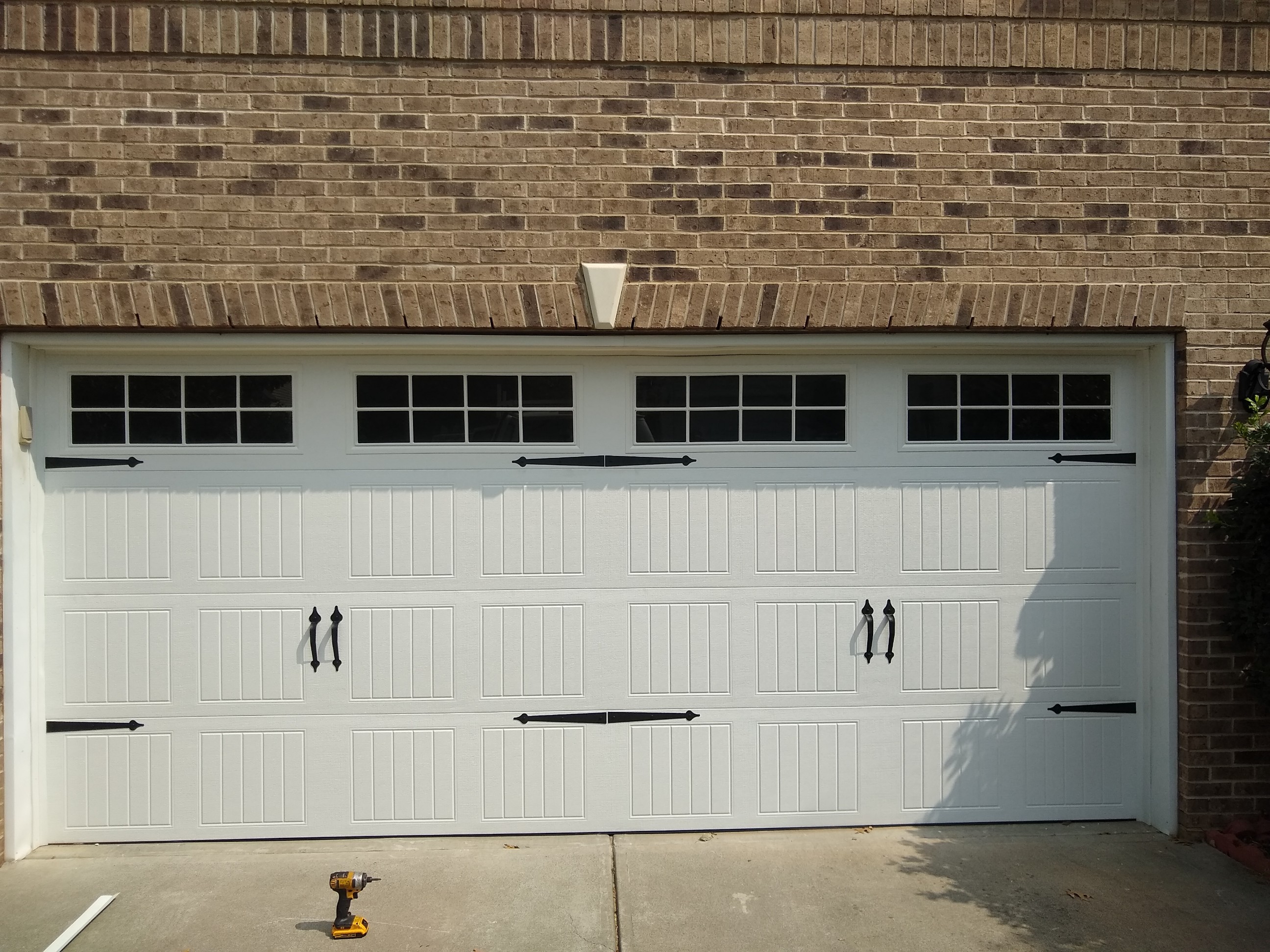
Garage doors with decorative window panels often experience worse heat problems than solid doors, even when both have similar insulation levels. Windows create thermal weak points where heat transfers more readily, and the sun’s direct rays passing through glass can raise interior temperatures dramatically through the greenhouse effect.
Standard single-pane windows in garage doors offer almost no insulation value (approximately R-1), allowing heat to flow freely in both directions. During summer afternoons when the sun shines directly on these windows, the transmitted light heats objects inside your garage, which then radiate that absorbed warmth long after the sun moves on.
Window upgrade options:
- Double-pane insulated glass: Two glass layers with an air gap between them provide R-2 to R-3 insulation value, significantly reducing heat transfer compared to single panes.
- Low-E coated glass: Special coating reflects infrared heat while allowing visible light to pass through, cutting solar heat gain by 30% to 50% without reducing natural lighting.
- Tinted or frosted glass: Reduces direct light transmission and solar heat gain while maintaining privacy and aesthetic appeal.
- Acrylic panels: Lightweight alternative to glass offering better insulation properties (R-2 to R-2.5) with reduced breakage risk.
- Faux windows: Non-transparent decorative panels that mimic window appearance without creating thermal weak points.
If your garage door has windows and you’re experiencing severe heat issues, you face a choice: upgrade the window glazing or replace the entire door with a solid insulated model. The cost difference between these options varies based on your current door’s age and condition. A door requiring other repairs might be worth replacing entirely, while a newer door in good shape could benefit from window upgrades alone.
When customers ask about garage door windows, we always discuss the heat trade-off. Windows add curb appeal and natural light, but they compromise temperature control unless you invest in quality glazing. For garages in Midtown Raleigh or Five Points where the door faces south or west, we often recommend solid doors or limiting windows to the top panel where direct sun exposure stays minimal.
What About Garage Door Color and Heat Absorption?
Your garage door’s color significantly influences how much solar heat it absorbs and transfers into your garage. Dark colors can increase surface temperatures by 20 to 40 degrees compared to light colors under identical sunlight conditions. This temperature difference directly affects the heat load your insulation must handle.
Physics explains this color effect: dark surfaces absorb most of the solar energy that strikes them, converting that light energy into heat. Light-colored surfaces reflect much of that solar energy back into the atmosphere before it can convert to heat. A black garage door in direct sunlight might reach 150°F, while a white door under the same conditions stays around 110°F to 120°F.
Color impact on heat absorption:
| Door Color | Solar Reflectance | Peak Surface Temp (95°F day) | Heat Transfer Rating |
|---|---|---|---|
| Dark brown/black | 5-10% | 145-155°F | Very high |
| Medium gray/blue | 25-35% | 125-135°F | High |
| Tan/beige | 40-50% | 115-125°F | Moderate |
| White/cream | 60-80% | 105-115°F | Low |
Color choice interacts with insulation effectiveness. A well-insulated dark door might perform comparably to a poorly insulated light door, but a well-insulated light door always performs better than any dark alternative. If you’re planning a garage door panel repair or replacement, color selection deserves serious consideration alongside insulation specifications.
Some manufacturers offer special heat-reflective coatings and finishes that reduce solar heat gain regardless of the underlying color. These advanced finishes typically cost 10% to 20% more than standard paint but can lower surface temperatures by 10 to 15 degrees. For west-facing garages in neighborhoods like Brier Creek that receive intense afternoon sun, this investment often proves worthwhile.
When Should You Replace Rather Than Retrofit Insulation?
Deciding between adding insulation to your existing garage door or replacing it entirely depends on several factors: the door’s current condition, age, insulation options available for your door style, and total project cost. Sometimes retrofitting makes perfect sense, while other situations call for complete door replacement.
Older garage doors often lack the structural design needed to support added insulation weight properly. Adding 50 to 75 pounds of insulation material to a door that wasn’t engineered for that extra weight can strain the garage door springs, opener, and hardware. This imbalance leads to poor operation, increased wear, and potential safety issues.
Signs that replacement makes more sense than retrofitting:
- Door age exceeds 15-20 years: Older doors nearing the end of their service life probably need replacement soon anyway, making retrofit insulation a poor investment.
- Visible rust or structural damage: Compromised door integrity means added insulation weight could accelerate failure rather than extend door life.
- Single-layer construction: Very thin doors lack the depth needed to hold meaningful insulation material without excessive modification.
- Obsolete opener compatibility: If your garage opener already struggles with the current door weight, added insulation will worsen performance problems.
- Poor aesthetic condition: When the door looks tired and dated, replacement provides both insulation and curb appeal improvements simultaneously.
Modern insulated garage doors come with factory-installed insulation that’s precisely fitted and balanced. The door sections get manufactured with insulation already in place, eliminating the air gaps and weight distribution issues that plague retrofit projects. These doors also feature better weather sealing systems and updated hardware designed to handle the insulated door’s weight efficiently.
Cost comparison favors replacement in many scenarios. A quality retrofit insulation kit might cost $200 to $400 plus installation labor, bringing the total to $600 to $800. A new factory-insulated garage door typically runs $1,200 to $2,500 installed, depending on size and features. When the door already needs roller replacement, spring adjustment, or panel repairs, the incremental cost difference between retrofit and replacement shrinks considerably.
How Does Regular Maintenance Protect Your Insulation Investment?
Installing quality insulation and weather seals represents just the beginning of temperature control. Maintaining these systems ensures they continue performing effectively year after year. Without proper care, even the best insulation can deteriorate or become compromised, gradually losing its heat-blocking capability.
Weather seals face constant stress from temperature cycling, UV exposure, and mechanical wear from daily door operation. Inspecting these seals twice yearly allows you to catch problems before they become serious. Spring and fall make ideal inspection times since they coincide with seasonal temperature transitions when seal performance matters most.
Critical maintenance tasks for insulated garage doors:
- Weather seal inspection: Check all seals for cracks, compression, gaps, or separation from mounting surfaces. Replace any compromised sections right away.
- Insulation integrity check: Look for shifting, settling, or separation of insulation panels inside the door. Secure loose sections before they create thermal gaps.
- Hardware adjustment: Insulated doors weigh more than uninsulated ones, putting extra stress on hinges, rollers, and springs. Regular track alignment prevents binding and uneven wear.
- Lubrication: Moving parts need proper lubrication to operate smoothly under the added weight of insulation. This reduces friction and extends component life.
- Balance testing: An unbalanced door works the opener harder and wears springs faster. Testing balance quarterly catches problems early.
Our preventative maintenance program includes thermal imaging inspections that show exactly where heat enters your garage. We’ve found problems invisible to the naked eye: compressed insulation sections, hidden air leaks, and seal gaps that let hot air infiltrate. Catching these issues during routine maintenance prevents the gradual performance decline most homeowners never notice until their garage becomes unbearable again.
Scheduled preventative maintenance plans save money compared to reactive repairs. When you catch a worn weather seal during inspection, replacing it costs $100 to $200. Waiting until that failed seal allows water infiltration that damages your insulation might require a $500 to $800 insulation replacement project. Regular attention to small issues prevents expensive major repairs.
Can You Measure the Actual Temperature Difference Insulation Creates?
Many homeowners wonder whether garage insulation really delivers the temperature reductions claimed by manufacturers and installers. Testing with proper equipment provides definitive answers and helps you set realistic expectations for your specific situation.
Infrared thermometers and thermal imaging cameras reveal temperature differences that your hand can’t detect accurately. These tools show exact surface temperatures on both sides of your garage door, measuring the insulation’s effectiveness in real-world conditions. Professional safety inspections often include thermal imaging to identify weak points in your garage’s thermal envelope.
Expected temperature reduction by insulation quality:
| Insulation Level | Investment Range | Temp Reduction (vs. uninsulated) | Payback Period |
|---|---|---|---|
| Basic retrofit (R-4 to R-6) | $600-$900 | 10-15°F | 4-6 years |
| Quality retrofit (R-8 to R-12) | $1,000-$1,500 | 15-20°F | 3-5 years |
| Factory insulated door (R-12 to R-16) | $1,500-$2,500 | 20-25°F | 2-4 years |
| Premium insulated door (R-16+) | $2,500-$4,000 | 25-30°F | 3-5 years |
These temperature reductions assume proper installation and good weather sealing. A high R-value door with poor seals won’t achieve these results because air leaks undermine the insulation’s effectiveness. The numbers also vary based on your garage’s sun exposure, ventilation, and whether you have living spaces above the garage.
Time of day affects measurements too. The maximum temperature difference typically occurs during mid-afternoon when outside temperatures peak and the sun shines directly on your garage door. Early morning measurements show smaller differences since the door and garage have cooled overnight. Taking readings at different times throughout a hot day gives you the complete picture of insulation performance.
Frequently Asked Questions About Garage Temperature Control
Q: Will adding insulation to my garage door make it too heavy for my opener?
Most modern garage door openers handle insulated door weight without problems if the door stays properly balanced. Retrofit insulation adds 40 to 75 pounds, which falls within the capacity of most residential openers. If your opener already struggles with the current door, spring adjustment or opener replacement might be needed before adding insulation weight.
Q: How long does garage door insulation typically last?
Factory-installed insulation lasts as long as the door itself, typically 15 to 25 years. Retrofit insulation longevity depends on installation quality and material type. Polyurethane foam insulation often lasts 20+ years, while polystyrene panels may settle or shift within 10 to 15 years, requiring adjustment or replacement.
Q: Can I insulate just the garage door, or do I need to insulate walls and ceiling too?
The garage door contributes most to heat gain because of its large surface area and direct sun exposure. Insulating just the door provides significant improvement. For maximum temperature control, though, adding wall and ceiling insulation creates a complete thermal envelope that keeps the garage much cooler than door insulation alone.
Q: Does garage door color really make that much difference in summer heat?
Yes, color choice significantly impacts heat absorption. Dark-colored doors can reach surface temperatures 20 to 40 degrees higher than light-colored doors under identical conditions. This temperature difference increases the heat load your insulation must block. Light colors reduce heat absorption before it reaches the insulation layer.
Q: Will better insulation help in winter too, or just summer?
Quality garage door insulation provides benefits year-round. In summer, it blocks heat from entering. In winter, it prevents warmth from escaping, keeping the garage warmer and reducing cold air infiltration into adjacent living spaces. The energy savings and comfort improvements occur in both heating and cooling seasons.
Q: How can I tell if my garage weather seals need replacement?
Check for visible light gaps around the closed door perimeter, especially at the bottom. Feel for air movement along seal edges on windy days. Look for cracked, compressed, or missing sections of rubber sealing material. If you can easily pull the seal away from its mounting track, it needs replacement.
Q: Is professional installation worth the cost for garage insulation?
Professional installation provides several advantages: proper material selection for your climate, correct weight distribution to maintain door balance, complete air sealing around insulation panels, and warranty coverage. DIY installation can work for simple retrofit kits, but professional work typically delivers better long-term performance and reliability.
Transform Your Overheated Garage Into Comfortable Space
Your garage doesn’t have to feel like a sauna every summer afternoon. Proper insulation, quality weather sealing, and strategic ventilation can reduce temperatures by 20 to 30 degrees, making the space comfortable for working, storing temperature-sensitive items, and reducing the cooling load on your home’s HVAC system. The investment pays for itself through lower energy bills while immediately improving your daily comfort.
At RJ Garage Door Services, our technicians bring years of experience helping Raleigh homeowners solve garage heat problems. We assess your specific situation, recommend the most effective solutions for your budget, and install quality materials that deliver lasting results. Whether you need insulation retrofitting, complete door replacement, weather seal service, or comprehensive thermal upgrades, we provide the expertise to make your garage comfortable year-round.
Don’t spend another summer avoiding your garage because of unbearable heat. Contact RJ Garage Door Services today for a free consultation and thermal assessment. We’ll show you exactly where heat enters your garage and explain your options for creating a cooler, more comfortable space that protects your belongings and reduces your energy costs.